

Fashion is much more than designing attractive clothes. It is a combination of creativity, textiles, technology, craftsmanship, business, culture and consumer understanding. For students who enjoy clothing, fabrics, colours, styling and creative problem-solving, fashion designing can be an exciting and diverse career option in India. However, succeeding in the industry requires more than artistic talent. A professional fashion designer also needs to understand garment construction, textiles, digital tools, market trends, communication and business.
If you are considering fashion designing as a career in India after Class 12, planning to pursue a fashion design course, or thinking about starting your own fashion brand, this guide will help you understand the education pathways, skills, career opportunities, salary expectations and future scope of the industry.
Note: Course structures, fees, admission requirements, salaries and industry opportunities can change over time. Students should verify the latest information with the relevant institution or employer before making an education or career decision.
What Is Fashion Designing?
Fashion designing is the process of researching, conceptualising, designing, developing and presenting clothing and fashion products.
A fashion designer may work on:
- Womenswear
- Menswear
- Kidswear
- Bridal wear
- Couture
- Ready-to-wear
- Sportswear
- Streetwear
- Sustainable fashion
- Luxury fashion
- Costume design
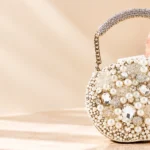
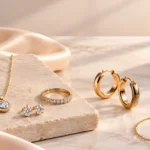
- Fashion Accessories
- Textiles and surface design
Professional fashion design involves much more than sketching clothes.
A designer may begin with trend and consumer research, develop a concept and mood board, select fabrics and colours, create illustrations, develop patterns, construct prototypes, test garment fit and eventually present a complete collection.
Leading fashion-design programmes reflect this combination of creative and technical skills, covering areas such as design, illustration, pattern making, draping, garment construction, textiles, digital tools, trend analysis and collection development.
Is Fashion Designing a Good Career in India?
Yes, fashion designing can be a rewarding career in India, but it is also competitive and demanding.
The industry offers opportunities across:
- Fashion brands
- Designer labels
- Export houses
- Textile companies
- Apparel manufacturers
- Retail
- E-commerce
- Fashion media
- Styling
- Fashion communication
- Product development
- Fashion technology
- Entrepreneurship
A fashion design graduate can eventually work as a designer, stylist, merchandiser, textile designer, product developer, fashion communicator or entrepreneur.
The most successful professionals generally combine creative ability with technical knowledge, commercial awareness and continuous learning.
Fashion designing may be suitable for you if you:
- Enjoy creative work
- Have an interest in clothing and textiles
- Like experimenting with colours and materials
- Have good observation skills
- Pay attention to detail
- Enjoy solving visual and practical problems
- Are willing to learn technical skills
- Can accept criticism and improve your work
- Have good communication skills
- Are interested in fashion trends and consumer behaviour
- Are comfortable working with deadlines
Fashion may not be the right choice if you dislike practical work, repetitive technical tasks, deadlines or the business side of the industry.
What Does a Fashion Designer Actually Do?
The responsibilities of a fashion designer vary depending on the organisation and specialisation.
A professional designer may be involved in:
- Market research
- Trend research
- Consumer research
- Concept development
- Mood-board creation
- Colour selection
- Fabric research
- Fashion illustration
- Technical drawings
- Pattern development
- Draping
- Prototype development
- Garment fitting
- Sampling
- Surface development
- Collection development
- Costing
- Production coordination
- Styling
- Presentation
This is why students should not choose fashion designing simply because they enjoy drawing clothes. Fashion designing is both a creative and technical profession.
Fashion Designing Courses After Class 12
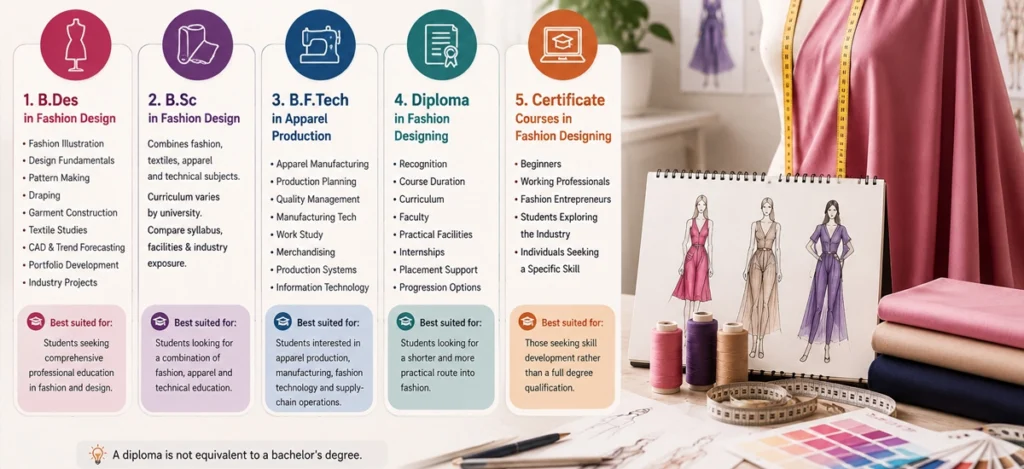
Students have several educational pathways into the fashion industry.
1. B.Des in Fashion Design
The Bachelor of Design (B.Des) is one of the most popular undergraduate routes into fashion design.
Depending on the institution, students may study:
- Fashion illustration
- Design fundamentals
- Pattern making
- Draping
- Garment construction
- Textile studies
- Fashion history
- CAD
- Trend forecasting
- Collection development
- Portfolio development
- Industry projects
Leading institutions such as the National Institute of Fashion Technology offer B.Des programmes in Fashion Design and related disciplines including Textile Design, Accessory Design, Knitwear Design and Fashion Communication.
Best suited for: Students seeking comprehensive professional education in fashion and design.
2. B.Sc in Fashion Design
B.Sc programmes in Fashion Design or Fashion & Apparel Design can combine fashion, textiles, apparel and technical subjects.
The exact curriculum varies significantly between universities. Students should therefore compare the actual syllabus, practical facilities and industry exposure rather than choosing a programme based only on the degree title.
Best suited for: Students looking for a combination of fashion, apparel and technical education.
3. B.F.Tech in Apparel Production
A Bachelor of Fashion Technology (B.F.Tech) is different from a conventional Fashion Design degree.
It focuses more heavily on:
- Apparel manufacturing
- Production planning
- Quality management
- Manufacturing technology
- Work study
- Merchandising
- Production systems
- Information technology
Best suited for: Students interested in apparel production, manufacturing, fashion technology and supply-chain operations.
4. Diploma in Fashion Designing
Diploma courses can be suitable for students looking for a shorter and more practical route into fashion.
Before enrolling, check:
- Recognition of the qualification
- Course duration
- Curriculum
- Faculty
- Practical facilities
- Internship opportunities
- Placement support
- Progression opportunities
A diploma should not automatically be treated as equivalent to a bachelor’s degree.
5. Certificate Courses in Fashion Designing
Certificate programmes can be useful for:
- Beginners
- Working professionals
- Fashion entrepreneurs
- Students exploring the industry
- Individuals seeking a specific skill
They can be particularly useful when the objective is skill development rather than obtaining a full undergraduate qualification.
What Do You Study in Fashion Designing?
A good fashion-design programme should develop both creative thinking and technical execution.
Design Subjects
- Design principles
- Colour theory
- Visual research
- Concept development
- Fashion illustration
- Collection planning
Garment Development
- Pattern making
- Draping
- Sewing
- Garment construction
- Fitting
- Prototyping
Textile Studies
- Fibre and fabric studies
- Weaving
- Printing
- Dyeing
- Embroidery
- Surface ornamentation
- Textile experimentation
Fashion Studies
- Fashion history
- Indian textiles
- Costume history
- Contemporary fashion
- Trend forecasting
- Consumer behaviour
Digital Skills
- CAD
- Digital illustration
- Digital pattern development
- 3D garment visualisation
- Portfolio software
- Presentation tools
Business and Management
- Fashion merchandising
- Fashion marketing
- Retail
- Brand development
- Costing
- Entrepreneurship
The exact subjects and depth of practical training vary by institution, so students should always review the current syllabus before applying.
Do You Need to Know Drawing Before Studying Fashion Design?
No, you do not need to be an expert artist before joining a fashion-design course.
However, you should be willing to develop your drawing and visual communication skills. Fashion illustration is different from fine-art drawing. Fashion students learn how to communicate:
- Garment silhouettes
- Proportion
- Fabric behaviour
- Details
- Colour
- Texture
- Construction
Technical drawings, often called fashion flats, are also important because designers need to communicate garment details accurately to pattern makers, manufacturers and other members of the product-development team.
Digital tools can assist designers, but they do not eliminate the need for fundamental design skills.
The important question is not:
“Can I draw perfectly?”
It is:
“Am I willing to practise and improve my visual communication skills?”
Essential Skills Every Fashion Design Student Should Develop
A successful fashion professional needs a combination of creative, technical and business skills.
| Skill | Why It Matters |
|---|---|
| Fashion illustration | Communicating design concepts |
| Colour theory | Creating cohesive collections |
| Textile knowledge | Selecting appropriate fabrics |
| Pattern making | Converting concepts into garments |
| Draping | Understanding shape and fit |
| Sewing | Understanding garment construction |
| Research | Developing relevant concepts |
| Trend forecasting | Understanding market direction |
| CAD | Creating professional digital designs |
| 3D fashion tools | Digital product development |
| Communication | Working with teams and clients |
| Presentation | Presenting ideas professionally |
| Business knowledge | Understanding commercial fashion |
| Portfolio development | Demonstrating skills to employers |
| Problem-solving | Handling real-world design challenges |
Fashion Designing Specialisations
Fashion is a broad field, and students do not necessarily have to follow the traditional fashion-designer route.
Womenswear
Womenswear covers categories such as:
- Ready-to-wear
- Occasion wear
- Bridal
- Couture
- Contemporary fashion
Menswear
Menswear can include:
- Formalwear
- Casualwear
- Streetwear
- Sportswear
- Contemporary fashion
- Luxury clothing
Kidswear
Kidswear requires a strong understanding of:
- Comfort
- Safety
- Sizing
- Age-appropriate design
- Fabric selection
Bridal and Couture
This area is suitable for students interested in:
- Bespoke garments
- Luxury fabrics
- Hand embroidery
- Craft
- Customisation
- Detailed garment development
Sustainable Fashion
Sustainable fashion focuses on areas such as:
- Responsible materials
- Waste reduction
- Circular design
- Ethical manufacturing
- Product longevity
- Recycling and upcycling
Textile Design
Textile-designers work on:
- Prints
- Weaves
- Embroidery
- Surface design
- Fabric development
Textile-design can overlap considerably with fashion design, particularly in traditional Indian crafts and contemporary textile innovation.
Fashion Styling
Fashion-stylists create complete visual looks for:
- Individuals
- Celebrities
- Campaigns
- Editorials
- Advertising
- Media productions
Fashion Communication
Fashion-communication focuses on communicating fashion through:
- Branding
- Photography
- Styling
- Visual communication
- Digital media
- Retail experiences
Fashion Merchandising
Fashion-merchandisers connect design and creativity with commercial requirements, including product planning, market demand, pricing and retail.
Career Opportunities After Fashion Designing
A fashion-design qualification can lead to many different careers.
- Fashion Designer – Develops clothing concepts and collections.
- Assistant Fashion Designer – Supports senior designers with research, sampling, design development and collection work.
- Textile Designer – Develops prints, patterns, weaves, embroidery and surface designs.
- Fashion Stylist – Creates looks for individuals, campaigns, publications, brands and media.
- Fashion Merchandiser – Works between design, production, retail and commercial teams.
- Fashion Buyer – Studies customer demand and helps select products for retail.
- Fashion Product Developer – Helps convert design concepts into commercially viable products.
- Fashion Communication Professional – Works across fashion branding, visual communication, styling, photography and digital media.
- Fashion CAD Designer – Uses digital tools to develop fashion designs and technical outputs.
- Costume Designer – Creates costumes for films, television, theatre and other productions.
- Fashion Entrepreneur – Builds and manages a fashion label, boutique, D2C brand or other fashion business.
The career possibilities are therefore considerably broader than the traditional role of a fashion designer.
Fashion Designer Salary in India
One of the most common questions students ask is:
“How much does a fashion designer earn in India?”
There is no single salary figure because earnings depend on:
- Experience
- City
- Employer
- Institution
- Portfolio quality
- Technical skills
- Specialisation
- Brand segment
- Communication skills
A fresher working for a small design studio can have a very different salary from someone joining a large fashion retailer or established brand.
A typical career progression may look like:
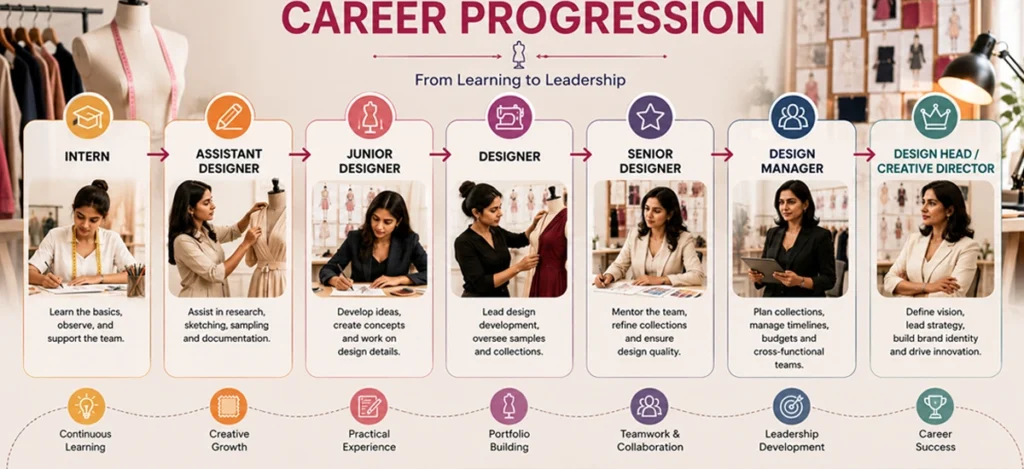
Entrepreneurs follow a different path. Their income depends on the performance and profitability of their business rather than a fixed salary.
Important advice
Be cautious of courses or advertisements that promise extremely high salaries immediately after graduation.
Instead, evaluate:
- Skill development
- Internship opportunities
- Portfolio quality
- Employer network
- Career progression
- Alumni outcomes
These factors can have a much greater impact on long-term earning potential.
Can a Fashion Designer Start Their Own Brand?
Yes. Fashion entrepreneurship is one of the most exciting career options in the industry. However, designing clothes is only one part of running a fashion business.
A successful fashion entrepreneur needs to understand:
- Target Customer – Who will buy your products?
- Market Positioning – Are you building an affordable, premium, luxury, sustainable or niche brand?
- Product Development – What makes your products different?
- Fabric Sourcing – Where will you obtain fabrics, trims and accessories?
- Manufacturing – Who will produce your garments?
- Costing – What does each product actually cost to manufacture?
- Pricing – What price will customers pay while allowing a sustainable business margin?
- Branding – How will customers recognise your brand?
- Marketing – How will you reach your target audience?
- Distribution – Will you sell through website, marketplaces, boutiques, retail stores, social media, pop-ups, a designer who understands both creativity and business has a strong foundation for building a fashion brand.
How to Build a Fashion Design Portfolio
Your portfolio is one of the most important assets you can develop as a fashion student. A strong portfolio should demonstrate how you think, not just show finished drawings.
Consider including:
- Design research
- Mood boards
- Concept development
- Colour palettes
- Fabric exploration
- Fashion sketches
- Technical drawings
- Pattern experiments
- Garment development
- Final garments
- Photography
- Styling
- Collection presentation
- Design rationale
A strong portfolio project can follow this process:
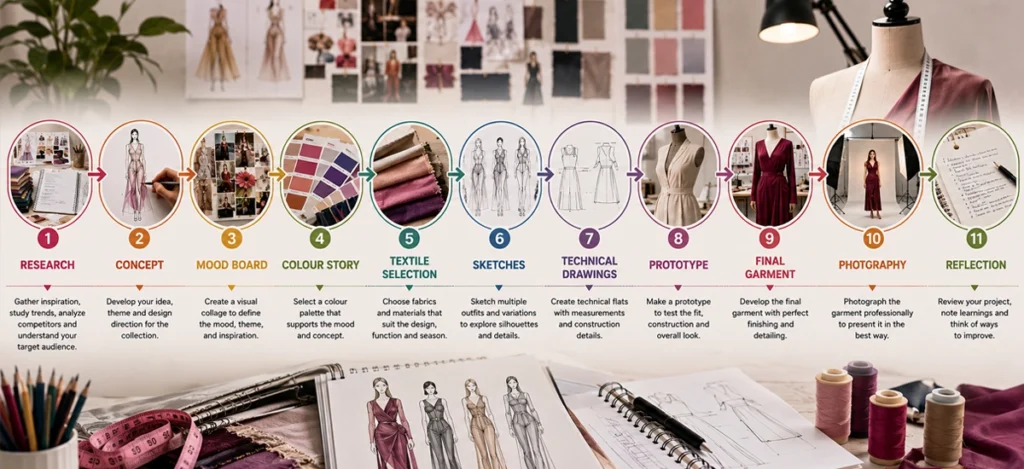
This demonstrates your ability to take an idea from research through to execution.
Why Are Internships Important in Fashion Designing?
Classroom education cannot fully reproduce the pace and complexity of professional fashion production.
An internship can expose students to:
- Deadlines
- Client requirements
- Sampling
- Production
- Fabric sourcing
- Vendor management
- Fittings
- Fashion shoots
- Retail
- Marketing
- Professional communication
Students should consider internships with:
- Designer studios
- Export houses
- Apparel manufacturers
- Textile companies
- Fashion retailers
- E-commerce brands
- Styling agencies
- Fashion startups
- Production houses
Do not focus only on famous fashion labels. A smaller company can sometimes provide greater hands-on experience.
Technology and AI in Fashion Designing
Technology is rapidly changing how fashion products are researched, designed, developed and sold.
Important technologies include:
- CAD
- Digital illustration
- Digital pattern making
- 3D garment simulation
- Digital sampling
- AI-assisted research
- Trend forecasting
- E-commerce
- Digital marketing
- AR/VR
- Smart textiles
AI can assist with areas such as:
- Concept generation
- Research
- Mood-board development
- Trend analysis
- Image creation
- Product descriptions
- Marketing workflows
However, AI does not replace fundamental fashion knowledge.
A designer who understands fabric, construction, fit, proportion and consumer needs can use technology much more effectively than someone who relies entirely on generated visuals.
The future fashion professional is likely to need a combination of: Creative Thinking + Technical Skills + Digital Skills + Business Understanding
Fashion Designing and Sustainability
Sustainability has become an increasingly important area within fashion.
Students should understand:
- Responsible material selection
- Textile waste
- Overproduction
- Product longevity
- Circular design
- Recycling
- Upcycling
- Responsible sourcing
- Ethical manufacturing
- Sustainable production
Sustainable fashion should not be treated simply as a marketing term. Designers need to understand the actual environmental and social implications of design, sourcing and production decisions.
Best Cities for Fashion Careers in India
Different cities offer different advantages.
Mumbai
Strong opportunities in:
- Designer labels
- Luxury fashion
- Bollywood and costume
- Fashion media
- Retail
- E-commerce
- Fashion brands
Delhi/NCR
Strong for:
- Couture
- Bridal fashion
- Export houses
- Fashion retail
- Designer studios
- Apparel manufacturing
Bengaluru
Known for opportunities connected with:
- Fashion technology
- E-commerce
- Startups
- Retail
- Digital businesses
Ahmedabad
Particularly relevant for:
- Textiles
- Manufacturing
- Traditional crafts
- Textile entrepreneurship
Jaipur
Strong in:
- Handicrafts
- Block printing
- Traditional textiles
- Ethnic fashion
- Jewellery
Tiruppur
A major centre for apparel manufacturing and exports. The best city therefore depends on your intended career. A student interested in textile manufacturing may benefit from a different location than someone targeting luxury fashion or fashion media.
Fashion Designing vs Fashion Styling
These two fields are often confused.
| Fashion Designing | Fashion Styling |
|---|---|
| Creates fashion products | Creates complete visual looks |
| Strong technical component | Strong visual component |
| Pattern making is important | Pattern making is generally not central |
| Textile knowledge is important | Image and brand knowledge are important |
| Product development is central | Presentation and visual storytelling are central |
| Can lead to a fashion brand | Can lead to styling, media and image careers |
If you enjoy creating garments, Fashion Designing may be a better fit. Even If you enjoy creating looks and visual identities, Fashion Styling may be more suitable.
Fashion Designing vs Textile Design
Textile Design focuses primarily on the fabric and surface, while Fashion Design generally focuses on the garment or fashion product.
Textile designers may work on:
- Prints
- Weaving
- Embroidery
- Surface patterns
- Fabric development
Fashion designers use these textiles to create garments and collections.
Students interested in Indian crafts, handloom, prints and material innovation may find Textile Design particularly rewarding.
Common Mistakes Fashion Design Students Make
- Focusing Only on Sketching – Beautiful sketches are useful, but professional designers also need to understand construction and production.
- Ignoring Textiles – Fabric behaviour can significantly affect the appearance and performance of a garment.
- Avoiding Technical Subjects – Pattern making, sewing, fitting and construction may be challenging, but they are valuable professional skills.
- Copying Designs from Pinterest and Instagram – Research is important, but your portfolio should demonstrate your own thinking.
- Waiting Until the Final Year for Internships – Start gaining practical experience as early as your course allows.
- Ignoring Digital Tools – Technology is increasingly important across design and product development.
- Failing to Document Projects – Keep photographs, sketches, research and development stages of your work throughout college.
- Ignoring Business – Anyone planning to start a fashion brand needs to understand costing, pricing, sourcing and production.
- Choosing a College Only Because It Is Famous – The specific course, faculty, facilities, curriculum and industry connections matter.
- Believing Every Placement or Salary Claim – Ask for credible, programme-specific information wherever possible.
How to Choose a Fashion Designing Course
Before joining a fashion institution, evaluate the following factors.
1. Recognition
Check who awards the qualification and whether the programme is appropriately recognised.
2. Curriculum
Look for a balance between creative design, technical skills, technology and business.
3. Faculty
Research faculty qualifications, professional experience and industry exposure.
4. Practical Facilities
Check whether the institution has suitable:
- Sewing labs
- Pattern-making facilities
- Draping studios
- Textile labs
- Digital labs
5. Industry Exposure
Look for genuine internships, live projects, workshops and industry collaborations.
6. Portfolio Development
Review the quality of actual student portfolios and graduation projects.
7. Placement Information
Ask for programme-specific placement information rather than relying only on university-wide statistics.
8. Alumni Network
Research where graduates work and what types of careers they have built.
9. Technology
Check whether the course includes relevant digital design and product-development tools.
10. Total Cost
Don’t consider tuition alone. Calculate:
- Hostel
- Food
- Fabric
- Materials
- Laptop
- Software
- Projects
- Travel
- Internship expenses
What Should You Do Before Joining a Fashion Design Course?
You do not have to wait for college to start developing your skills.
Months 1–2: Drawing and Colour
Learn basic:
- Drawing
- Proportion
- Colour theory
- Fashion illustration
Months 3–4: Fabrics and Sewing
Start learning:
- Fabric types
- Fabric behaviour
- Basic sewing
- Garment components
Months 5–6: Fashion Illustration
Practise:
- Figure drawing
- Garment silhouettes
- Fashion details
- Technical flats
Months 7–8: Pattern Making
Learn basic principles of:
- Measurements
- Blocks
- Pattern development
- Garment construction
Months 9–10: Digital Skills
Begin exploring:
- Digital illustration
- CAD
- Presentation tools
- Fashion design software
Months 11–12: Portfolio
Create a small portfolio containing:
- Research
- Mood boards
- Sketches
- Textile experiments
- Garment projects
- Final photographs
This preparation can give you a valuable foundation before starting formal education.
Future Scope of Fashion Designing in India
The fashion industry is evolving rapidly, creating opportunities in both traditional and emerging areas.
Some important trends include:
- Sustainable fashion
- Circular fashion
- AI-assisted design
- 3D garment development
- Digital fashion
- D2C brands
- Social commerce
- Personalisation
- Indian textile heritage
- Craft-based fashion
- Luxury fashion
- Fashion resale
- Smart textiles
- Fashion technology
- Global fashion exports
Students who combine traditional fashion skills with digital technology, sustainability and business knowledge may be better positioned for the changing industry.
Fashion Designing Career Roadmap
If You Are Studying After Class 10
During Classes 11 and 12, focus on developing:
- Creativity
- Drawing
- Communication
- General awareness
- Fashion knowledge
- Basic sewing and textile knowledge
Also research the eligibility requirements of the institutions you may want to apply to later.
After Class 12
A practical pathway is:
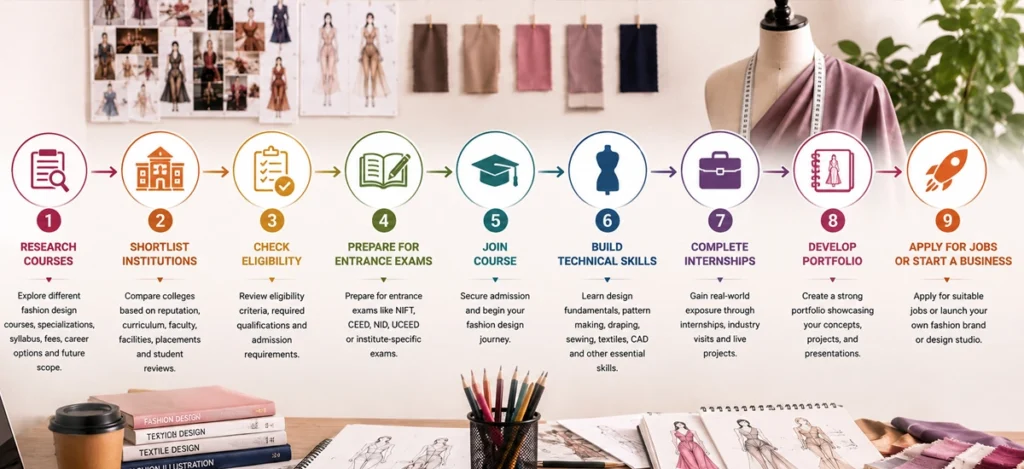
Do not select an institution only because of its reputation. Compare the curriculum, fees, facilities, faculty, industry exposure and career outcomes.
During College
Try to graduate with:
Degree + Technical Skills + Portfolio + Internship Experience + Industry Network
A degree alone is rarely enough to distinguish a fashion graduate in a competitive job market.
Final Verdict: Should You Choose Fashion Designing?
Fashion Designing can be an excellent career option in India for students who genuinely enjoy design, clothing, textiles, creativity and problem-solving.
However, successful fashion professionals are not simply good at drawing.
They understand:
Design + Textiles + Construction + Technology + Communication + Business + Consumer Needs
The strongest students use their education as a foundation and continue developing their abilities through internships, personal projects, competitions, industry exposure and independent learning.
If you are serious about fashion designing as a career in India, start building your skills before entering college. Learn how garments are constructed. Study fabrics. Observe how fashion brands operate. Create small design projects. Document your work. Learn digital tools. Build your portfolio. Most importantly, develop your own design perspective rather than simply copying trends.
Frequently Asked Questions About Fashion Designing
Q. Is Fashion Designing a good career for students who cannot draw well?
A. Yes. Drawing skills can be developed through practice. However, students should be prepared to learn visual communication alongside technical skills such as textiles, pattern making and garment construction.
Q. Is Fashion Designing only about designing clothes?
A. No. The industry includes textiles, styling, fashion communication, merchandising, product development, manufacturing, technology, retail and entrepreneurship.
Q. Is a degree necessary to become a fashion designer?
A. Not always. Some professionals enter through diplomas, specialised courses, apprenticeships or industry experience. However, a recognised degree can provide structured education, industry exposure, facilities, internships and professional networks.
Q. Can Science or Commerce students study Fashion Designing?
A. Many fashion programmes accept students from different academic backgrounds, subject to their individual eligibility requirements. Always check the latest criteria of the institution you are applying to.
Q. Can a fashion designer start a business?
A. Yes. Fashion entrepreneurship is a significant career path. However, business skills are just as important as design skills when starting a brand.
Q. Is Fashion Designing a high-paying career?
A. It can become financially rewarding with experience, specialisation, senior positions or successful entrepreneurship. However, students should not expect exceptionally high salaries immediately after graduation.
Q. Is Fashion Designing difficult?
A. It can be demanding because it combines creativity with technical work, deadlines, research, presentations and practical projects. Students who enjoy learning and experimentation generally adapt better to the workload.



Leave Your Comment: