

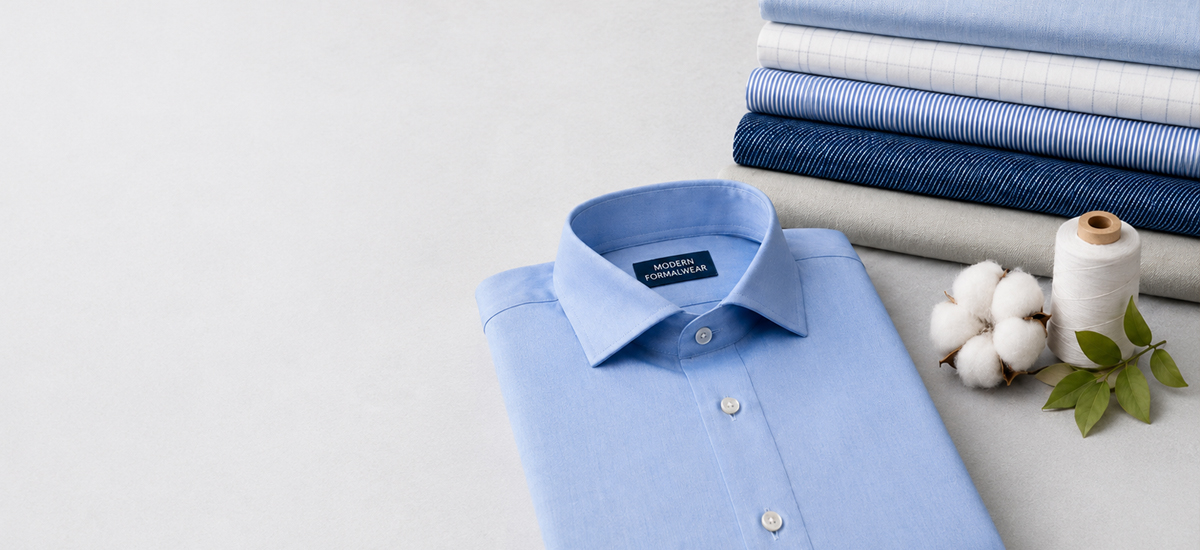
The common dress shirt is undergoing an economic revolution. Beneath each sharp collar and well-pressed cuff lies a fabric supply chain that is being reinvented thanks to sustainability initiatives, e-commerce distribution requirements, and a whole generation of consumers who want to see their formal wear function as much as they do. Based on a recent market report by DataIntelo, the value of the shirting apparel fabrics market in 2025 is approximately $42.8 billion, while in the coming decade, by 2034, it will be worth almost $68.9 billion, increasing annually by 5.2%. This is not a high-growth market; it is something else: a mature category that is getting its economics completely reinvented.
To fashion designers, retail buyers, textile mills, and anyone following the future direction of formal wear, this number tells only half of the story. The truth of the matter is that there is an explanation to why shirting apparel fabric, which is one of the most age-old textile categories, continues to grow and what this means for the cost, quality, and sustainability of your shirt.
Shirting Apparel Fabric – Old Fabric, New Rules
Shirts have long favored cotton, and they continue to be made from cotton because it accounts for an estimated 42% of all revenue in shirting apparel fabrics due to its breathability and softness. Polyester and its blended variants with cotton rank just below, thanks to their wrinkle-resistant qualities and lower manufacturing costs, while linen and silk are at the higher-end part of the spectrum. But that is not what has altered about shirt fabrics it is simply how they are compared to each other.
About a decade back, the decision of purchasing shirting apparel fabric was based solely on price and feel. Now, the purchasing process includes certifications, carbon footprint disclosure, and even traceability. Fabrics carrying organic or sustainability certifications are commanding price premiums of 15% to 25% over conventional equivalents – and buyers are paying it, because increasingly their own customers are asking where the shirt came from before they ask how it looks.
Recent Developments Reshaping the Category
Sustainability Has Become a Pricing Strategy, Not Just a Marketing Line
Fashion companies have publicly committed to reducing their carbon footprint and sourcing sustainable materials in significant quantities by 2030. The pressure goes all the way down the value chain to shirt makers, who are developing technologies for waterless dyeing, nontoxic finishes, and blockchain-based traceability systems that will enable buyers to prove where the fabric was made with a few clicks. Regenerated cellulose fibers, like viscose and modal, and recycled polyester created from consumer plastics are finding shelf space as brands rush to provide “green” products.
Fabric Is Going Digital Before It’s Ever Cut
However, the evolution of the concept of previewing fabric using augmented reality, virtual try-on technologies, and mass customization systems has significantly transformed the approach to producing shirting that is delivered to the customer. In this case, rather than ordering large quantities of fabric in bulk, companies can produce customized fabrics, weaves, and finishes in smaller quantities. As a result, custom shirting apparel fabrics orders have increased much more quickly than the traditional wholesale model.
Production Cycles Are Shrinking
The automation and Industry 4.0 technologies that have been incorporated into fabric manufacturing in clothing factories have reduced lead times of up to twelve weeks down to three or four. This is very important in the fast fashion of casual and trend-based shirting that has entered the business casual category.
What’s Actually Driving That 5.2% Growth Rate
Certain elements are working together to ensure steady growth for this segment rather than any spike or stall:
- Demand for higher disposable incomes in emerging countries. The emerging middle class of India, Vietnam, Indonesia, and the Philippines is shifting from basic shirting material to premium cotton fabrics and special weaves.
- E-commerce adoption. Although the current market share held by e-commerce in this regard is small, it is still growing much faster than brick-and-mortar retail, supported by better visualization options which lead to reduced returns.
- Premiumization of the workplace environment. While casual wear is gaining momentum in Western corporate offices, formal shirting finds itself favored in emerging economies due to an increased number of white-collar employees and aspirations.
- Adoption of performance characteristics from athleisure wear. Characteristics such as moisture-wicking, anti-microbial, and wrinkle recovery finishes – once rare additions – have become almost standard in mid-premium shirting apparel fabric.
- Innovations in weaving. Twill weave shirting is becoming more popular due to its durability and comfort in business-casual clothing, while satin weave shirting is gaining popularity due to demand in premium formal and women’s wear.
The Regional Picture: Manufacturing Meets Consumption
Asia-Pacific continues to serve as the focal point of shirting apparel fabric materials, securing almost 39% of the total global market share. The reason for this can be attributed to two factors: Asia-Pacific is both the largest clothing manufacturing region as well as a rapidly growing consumption market. Thousands of mills for shirting are present in India, and these mills include companies that provide services from cotton spinning all the way to finished garments. Europe continues to hold its own via luxury formal wear along with strict environmental policies, while North America differentiates via consumer-based shirting.
Regulatory Pressure Is Now a Design Input
In regulation, there has been a shift from compliance to a driver that is actively influencing the way in which shirting apparel fabrics are developed. The drive by the EU towards the adoption of the circular design approach, coupled with the proposed digital product passports, has been forcing the mills to track the fiber source, processing steps, and recyclability of the garment at its end-of-life stage. The national due diligence laws that require companies to check on their supply chain have put more pressure on the brands that are getting materials from overseas mills.
What This Means for Industry Decision-Makers
As a result of the findings above, there are some lessons to be learned by brand managers, sourcing officers, and retail experts:
- Certification has been turned into a pricing mechanism, and consumers will be willing to pay for this.
- Customization platforms are increasingly mandatory, especially among those brands that cater to younger generations with an affinity for technology in their formalwear.
- There is definitely an advantage in terms of fabric variety. Specialty yarns and treatments are growing in popularity and outperforming simple commodities such as plain cotton or polyester.
- The need for supply chain transparency is becoming ever more unavoidable as regulation increases in export destinations throughout the decade.
In Conclusion
Although 5.2% does not seem to be an eye-catching figure, it hides an industry that is going through radical changes. Shirting fabrics are demonstrating that there isn’t anything that cannot be impacted by these trends, including the most traditional aspects of fashion, such as the cotton dress shirt or formal attire. Anyone who is going to launch a formal wear brand in the following decade must take these trends into account as seriously as they consider the thread count of their fabric.






Leave Your Comment: