

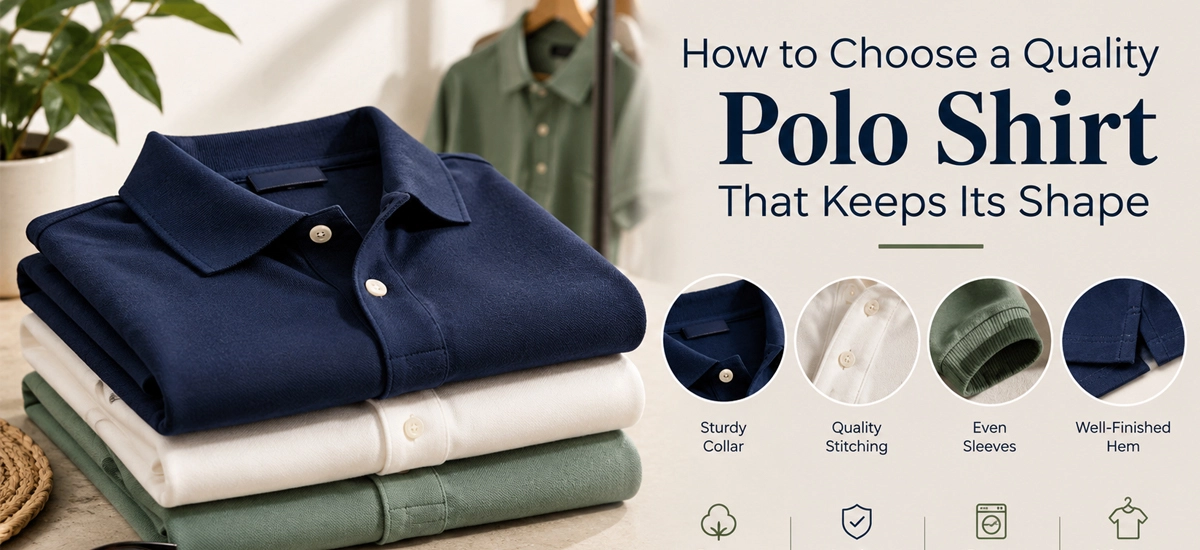
Choosing a polo shirt that maintains its shape after washing involves more than checking the fit in a fitting room. Polo shirt quality depends on factors such as fabric construction, collar stability, stitching, finishing, and proper care. The collar sits neatly, the sleeves look even, and the hem falls where you want it. After washing, though, the fit can change. The body feels shorter, a side seam turns toward the front, or the collar tips start to curl.
Shrinking, stretching, twisting, and collar distortion are different problems. A quick feel of the fabric cannot predict them all, but a closer look can reveal warning signs. Start with how the shirt sits, what its labels tell you, and whether its care routine fits your habits.
What actually helps a polo shirt keep its shape?
Shape retention involves the finished garment, including its collar, cuffs, opening, and body. Its behavior depends on the fibers and yarns, the arrangement of the knitted loops, processing and finishing, assembly, and care.
CottonWorks’ textile guidance explains that the way yarns and knitted loops are made and finished affects dimensional changes. [1] The fiber label is only part of the picture.
Consider the look you want, too. A softly draped jersey polo and a more structured textured style need not look alike. A relaxed collar roll may be intentional. Judge whether that shape suits you, then look for information about the shirt after washing.
How Polo Shirt Fabric Affects Quality and Shape Retention
Piqué and jersey describe fabric constructions. Cotton and polyester describe fibers. A polyester polo can be piqué, just as a cotton polo can be jersey.
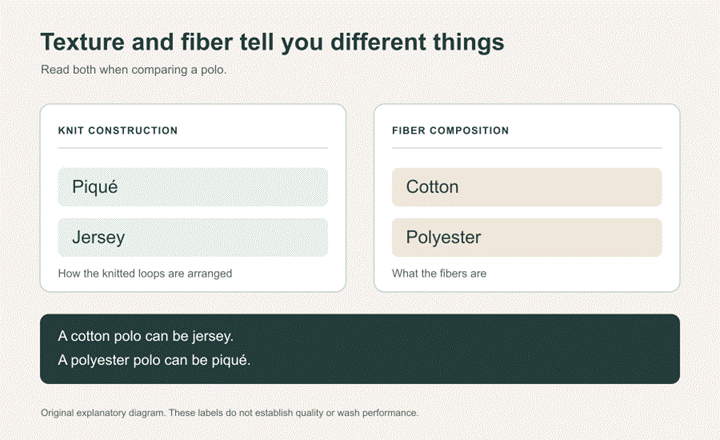
Knit construction and fiber composition describe different features of a polo.
Knitted piqué typically has a small textured surface; single jersey usually has a smoother face. Their knitted loops are arranged differently, but the yarns, finishing, and assembly also influence the shirt’s behavior. [1, 2] The texture gives you something to compare, not a quality ranking.
For a closer look at these textures, an illustrated guide to polo knit structures compares piqué, interlock, and mesh fabrics.
Cotton, polyester, and their blends can suit different preferences for feel and care. Synthetic content can alter the shrinkage behavior of a cotton blend, but the percentage on a label does not tell you the finished result. [1] Avoid treating pure cotton as automatically superior, or assuming a blend cannot change shape.
If a cotton piqué and a polyester piqué both catch your eye, compare the shirts themselves. Notice how each feels against your skin, how the body hangs, and what the care label asks you to do. Use the same checks for a blend. The name on the label should help you understand the shirt, not make the choice for you.
GSM means grams per square meter: fabric weight relative to area. [3] More weight may give the shirt a substantial feel, but it does not establish collar stability or recovery. A heavier polo is not automatically better made.
If the fabric stretches easily, watch what happens when ordinary handling stops. Stretch describes extension; recovery concerns returning toward the original shape. A material can have plenty of give yet remain distorted.
Examine the collar and placket
Check the collar in its relaxed position, without pulling the tips into place. Compare the sides and look at the edge. Does it already appear uneven or rolled in a way you dislike? Try it on to see whether its roll and shape suit your preferences.
Many polos use a rib-knit collar or cuff. Its ridges and sideways give are features of the structure; easy stretching alone is not a defect. Rib-knit collars can stretch across their width, while fiber properties, yarn structure, knit construction, and finishing influence how well they recover their original shape. [2] Stiffness is not proof of lasting stability either.
An already curling collar gives you an appearance problem to consider, not a diagnosis. Looking at it cannot establish whether the fiber, construction, or care caused the change.
The placket is the buttoned opening beneath the collar. Fasten it as you would wear it and look for twisting, uneven edges, or pulling around the buttons. If the opening strains across your chest when you sit down, try another size before blaming the construction.
Look at the seams and overall construction
Lay the polo naturally flat and smooth it lightly. The shoulders, sleeves, collar, and opening should look balanced for the intended design. Inspect inside the shoulder area for obvious gaps or loose stitching, without pulling the seam apart.
Follow each side seam toward the hem. If the body already seems to wind around itself, check how it sits when worn. Do not stretch the fabric straight to make it appear symmetrical.
Twisting is different from a shirt simply feeling tighter. The body can twist after washing because of factors such as fabric construction, manufacturing stresses, and changes during laundering. [4] Straight seams before purchase do not rule out later twisting, and a displaced seam does not identify the cause by itself.
Look along the sleeve openings and bottom hem for existing waviness or uneven attachment. Neat stitching is useful to notice, but step back and check how the whole shirt hangs as well.
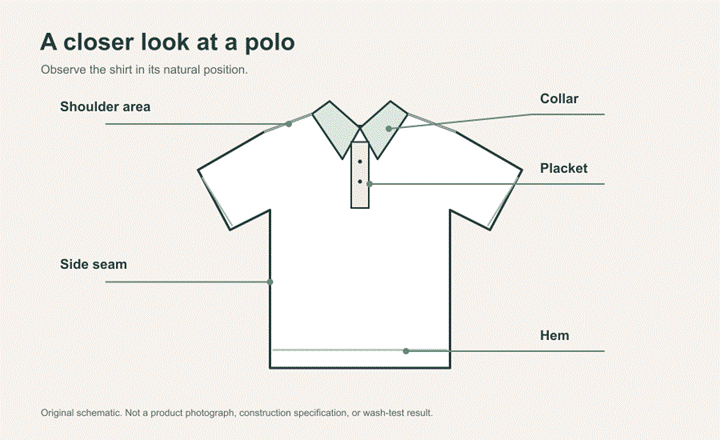
Look at the collar, opening, shoulders, side seams, and hem without pulling the shirt into shape.
Suggested to read: Shirting Apparel Fabrics Market
Simple checks you can do before buying
With the retailer’s permission, give the polo a closer look without tugging at it:
- Read both labels. Check fiber composition and all washing, drying, and ironing instructions. If you usually use a dryer, check whether this polo allows it.
- Lay it flat. Smooth it lightly and compare the collar, placket, sleeve openings, and hem without pulling them into position.
- Move as you normally would. Raise your arms, sit down, and stand up. For a polo you plan to wear at work, notice how it sits when seated at a desk. Check whether the opening strains or you keep pulling the body back into place.
- Handle the edges lightly. Notice whether the collar or cuff settles after gentle handling. Use only its natural give; do not stretch it to its limit.
- Question washing claims. If a product page calls the shirt durable or wash-tested, look for an explanation about that style and the care routine used. Specific before-and-after information is more useful than a broad claim.
Standardized garment tests, such as AATCC TM150, measure dimensional changes in length and width after specified home-laundering procedures. [5] Your shop checks show how the polo looks and fits now; they cannot establish its future wash performance.
Buying online? Look for close-ups of the collar, opening, and inside seams, as well as a full view of the shirt. Read the return terms before washing it to assess the fit; a washed item may no longer qualify.
How to Prevent Polo Shirt Shrinkage After Washing
Follow the complete care label
Read the washing, drying, and ironing instructions on the garment’s care label. [6] A cotton label, for example, is not permission to ignore a tumble-drying restriction or choose a hotter iron.
Washing and drying can release stresses introduced during processing, allowing the fabric to change dimensions. Cotton Incorporated’s technical guidance also emphasizes mechanical effects during drying; temperature alone does not explain every change. [1] Cold water is not a guarantee against shrinkage.
Use only the drying method and heat permitted by the label. If air drying is allowed, support the damp shirt without pulling the shoulders or collar out of position. Reshape it gently if instructed. Ralph Lauren’s care guidance recommends smoothing and reshaping its polo shirts while damp. Follow the care label on your own garment, since recommended methods can vary by fabric and finish.
Compare your own shirt after washing
For a polo you own, note its body length and chest width before washing, then compare the same positions after it is fully dry. Lay the shirt the same way each time and inspect the collar edge, placket, and side seams too. This tells you what happened under your care routine, not how long every similar polo will last.
If an important change appears, document it and contact the retailer. Avoid trying aggressive stretching or heat-based fixes before asking what support is available.
A quick polo shirt quality checklist
Before heading to the checkout, ask:
- Does the fabric feel comfortable and hang the way you want?
- Do the collar and placket sit well without constant adjustment?
- Are the shoulders, sleeves, seams, and hems free of obvious unintended distortion?
- Does light handling leave the collar or cuff visibly stretched?
- Can you follow the care instructions?
- Is there a clear explanation behind any washing claim?
Use the checklist when comparing two polos that both seem to fit. Look closely at the fabric, collar, and seams, and choose a care routine you can follow. For claims about washing, look for information about that exact style. Price, thickness, and a familiar label cannot replace it.
Sources
1. CottonWorks. Shrinkage & Skewing; Cotton Incorporated, Shrinkage webinar Q&A. Educational technical guidance, not test results for a polo in this article.
2. CottonWorks. Single & Double Knits. Knitted piqué, single jersey, and rib construction.
3. ASTM International. ASTM D3776/D3776M-20(2025), Standard Test Methods for Mass Per Unit Area (Weight) of Fabric. Public scope.
4. ISO. ISO 16322-3:2021, Textiles — Determination of spirality after laundering — Part 3: Woven and knitted garments, including the official preview definitions.
5. AATCC. TM150-2025, Dimensional Changes of Garments after Home Laundering. Public scope.
6. GINETEX. Care symbols.
7. Ralph Lauren. Care Guide: The Polo Shirt. Brand-specific care advice.





Leave Your Comment: