

Ethnic wear in 2026 is being shaped by a quieter, more intentional approach to fashion. Women are no longer choosing outfits purely for visual impact; they’re selecting silhouettes that align with how they live, move, and express themselves. In this context, the comparison between sharara and Anarkali feels especially relevant. Both are elegant, both are well-established, yet they serve modern dressing in very different ways.
The question isn’t which one is more traditional or more festive. It’s which silhouette fits the realities of modern wardrobes better?
The Evolving Hermeneutics of “Modern Dressing”
Contemporary dress in 2026 is characterized by feasibility, versatility, and psychological comfort. People hope to wear their outfits more than once and not have to overdo it with hair and accessories. Structure and detail, on the other hand, count less than movement, ease, and balance do.
This being the attitude, silhouettes that were once relegated to special occasions are under question, among them the sharara and Anarkali.
Sharara: Fluid, Relaxed, and Contemporary
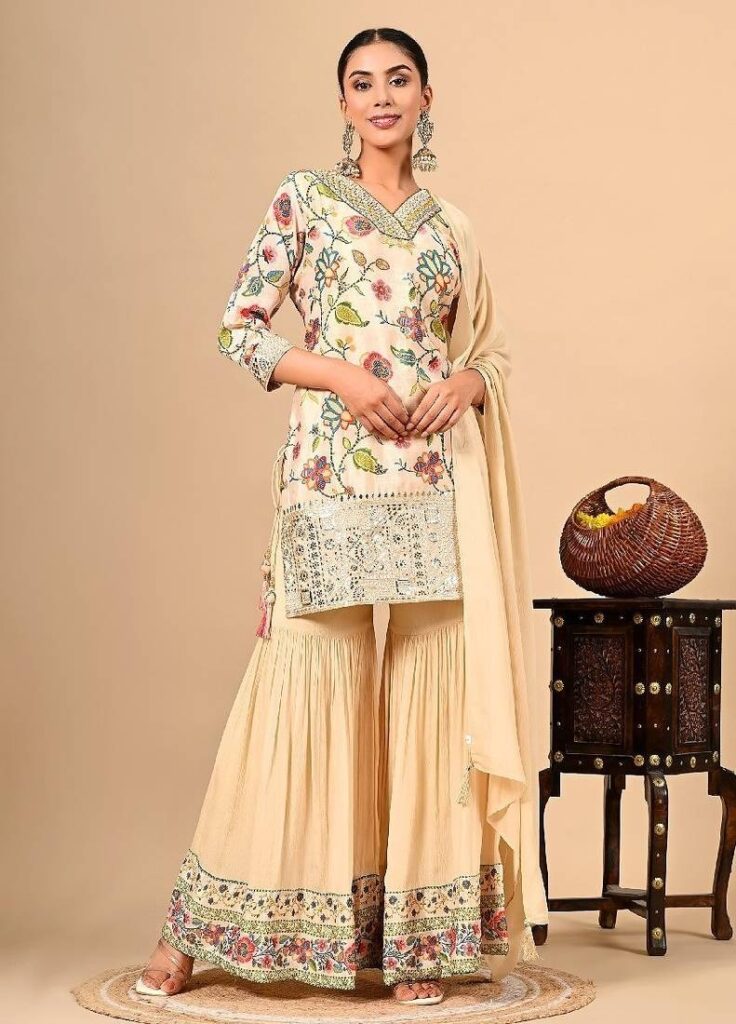
Sharara suits have come a long way in recent years. Now, in 2026, they’re a little less unveiling and a bit more shaped circulation. Movement is the sharara’s hallmark: great big panels that open and settle as they please, falling into a soft, expressive silhouette.
This fluidity is, perhaps, what makes the sharara invoke looks of modern dressing. The dress doesn’t dictate a shape; it accommodates the wearer. The new age sharara is lighter on the eye and easy to manage, perfect for daily wear.
Sharara fits modern dressing when:
- You like silhouettes that drape & move with you
- You value ease over formality
- You’re in the mood for something festive but not fussy
- You like expressive yet wearable design
In 2026, the sharara feels modern because it manages to combine elegance and flexibility.
Anarkali: Structured, Graceful, and Occasion-Led
The Anarkali outfits are extremely elegant & you can never go wrong with them. For better or worse, they’re the floor-length gown with a fitted bodice and then significant flair starting at your hips that reminds you what some of us still think of as a grown-up dress shape. This pattern makes Anarkali stand out, and they can never be outdated, but is limiting in style.
Anarkali feels like a distinctly occasion-driven outfit, even with different fabrics and more subtle cuts. It has visual heft and ceremony, which can feel less versatile in an everyday-modern wardrobe.
Anarkali works best when:
- The occasion calls for formality
- You prefer structured silhouettes
- You enjoy classic, composed elegance
- You want a celebratory outfit that feels slightly off the beaten path
In 2026, Anarkali is still worth something, just not in a flexible way.
Wearability and Repeat Use
One of the most evident differences between a sharara and an Anarkali in 2026 is repeat wear. Sharara suits, however relaxed their construction and fluid their shape, are more forgiving in terms of restyling and re-wearing. The accessories, dupattas, or footwear can also be switched up to add even more dramatic effect to the base outfit.
Anarkali feels whole to itself, by contrast. Although this is part of the appeal, it also makes restyling less adaptable. The silhouette isn’t one that easily swings a mood without sacrificing its hard-core identity.
And for women who are building repeat-wear wardrobes, there is a difference.
Styling Effort and Visual Balance
Contemporary dressing also cherishes outfits that don’t need a lot of heavy lifting to feel pulled together. A complete canvas, Sharara suits tend to look proportional despite minimal accessories, which means you can let the cut do the talking.
Anarkali suits generally require more thoughtful styling to correspond with the heavy design. This isn’t a negative, but it does mean they’re less spontaneous in the context of today’s world.
So, Which One Works Better for Contemporary Dressing?
“This time there is much more harmony between the modern way of dressing and the age-old sharara,” she says in 2026. “It’s to do with movement, ease, and versatility today. It’s the sort of thing that can be incorporated into today’s more casual wardrobes without feeling contrived or event-fettered.”
Anarkali, being more of a traditional and classical garment, can be better suited for traditional or formal occasions than for everyday modern wear. It is about presence and structure, not flexibility.
Final Thought
Sharara and Anarkali aren’t rival silhouettes; they serve distinct purposes. In the year 2026, modern dressing skews toward clothes that feel expressive rather than restrictive, polished without being heavy. In such a landscape, sharara fits comfortably with the pace of modern life, its rhythms and casual spirit; as does Anarkali, which can equally be de rigueur in moments that demand formality and tradition. Ultimately, deciding between them comes down to how you want your outfit to feel not just what you want it to look like.



Leave Your Comment: