

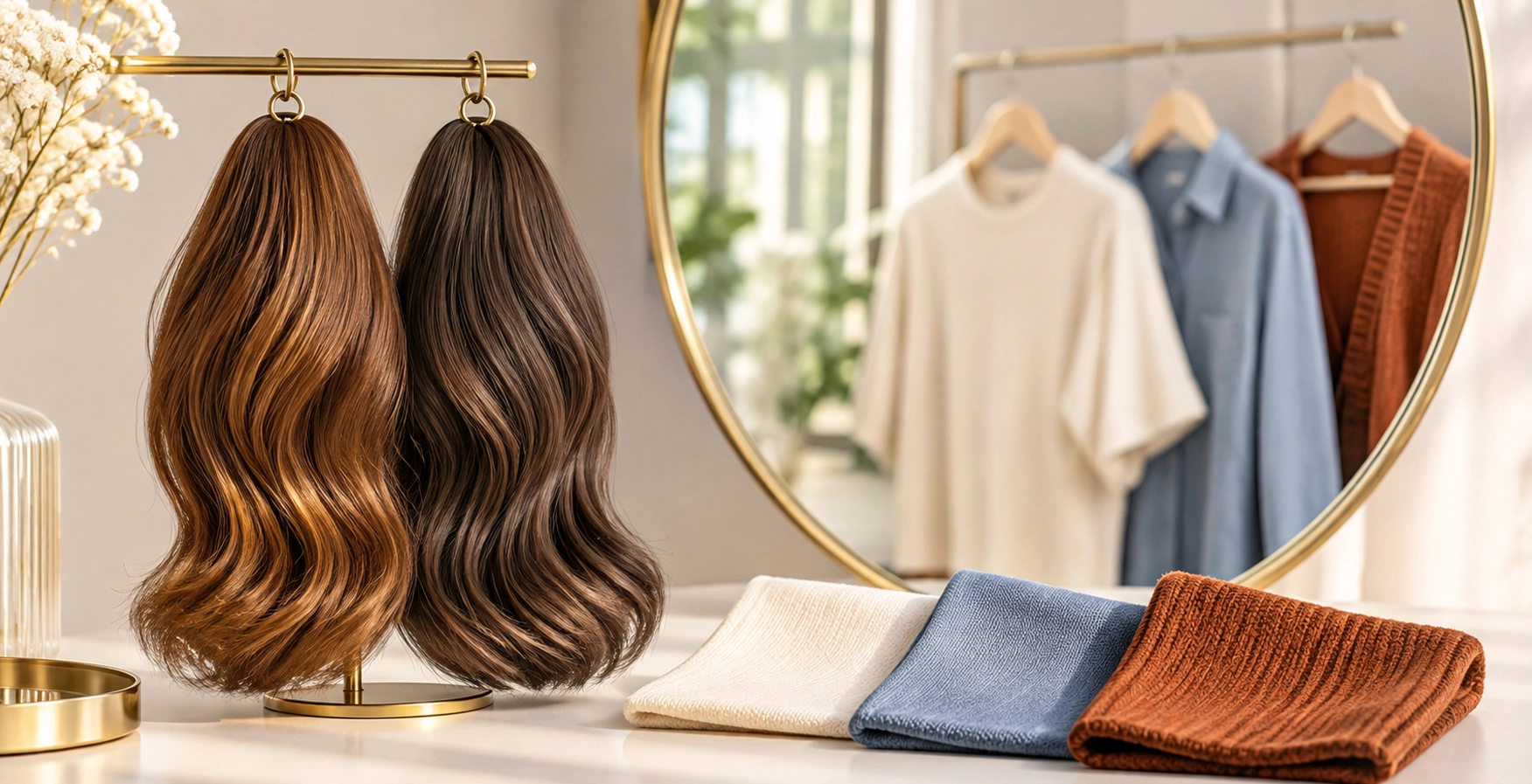
If you’re torn between two hair colours, take the decision out of the salon mirror for a moment and look in your wardrobe. Pick three tops you already wear, compare both shades with each top in the same light, and see which combinations you’d actually put on tomorrow. This works whether you’re considering a colour appointment or shopping for a wig. A different cut can change how much hair sits beside your face, so keep the shape as similar as possible while you compare.
Start with three tops you wear often
Choose tops that put different colours close to your face. A pair of trousers can stay out of the test. A collar, scarf or jacket lapel matters more here because you’ll see it beside your hair in the mirror.
- One everyday neutral. Think charcoal, cream or the navy you wear to work. Use the piece you reach for most often.
- One colour you wear regularly. A muted green jumper or a rust cardigan can show what happens when the outfit has a colour of its own.
- One top you especially like near your face. It might be a bright shirt, a patterned blouse or the black top you always wear to dinner. For a print, pay attention to the colour closest to the neckline.
Wear the tops as you normally would. If your usual navy jacket is always worn open over a white shirt, test the two together. If you’re choosing a shade for work and spend most days in a uniform, put the uniform in the test. There’s little point in letting one occasion outfit decide what you’ll wear for the rest of the week.
Compare two hair shades in the same daylight
Keep the light, angle and outfit steady
Stand beside a window with indirect daylight, switch off nearby lamps, and compare both shades within a few minutes of each other. Hold a hair swatch against your temple with enough of it visible to read the colour. If you have two wigs to try on, arrange the fringe and sides in roughly the same way. Start with both shades against the first top, then move on to the next. That makes it easier to remember what changed.
Take one photo of each combination from the same spot, at the same distance. Use the same camera and skip beauty filters. If one photo looks noticeably brighter or the colour of the top has shifted, take it again. Phones can adjust colour and exposure from shot to shot, so use the photos to jog your memory and let the mirror settle close calls. If you do most of your getting ready under indoor lights, give the leading shade a second look there afterwards.
Compare depth before warmth
Depth is how light or dark a shade looks. Warmth is whether the colour leans golden, coppery or reddish, or looks cooler and more muted. If you compare a pale warm brown with a much deeper cool brown, you may prefer one simply because it gives you more contrast. Compare two browns of similar depth if the question you’re trying to answer is whether you like the warmer or cooler finish.
For a rooted or highlighted shade, look at the colour that will sit next to your cheek and at the colour around the part. A swatch of the highlights alone won’t show how the darker roots will frame your face. In my work with EWIGSC, I look at the shade beside the face as well as at the part. If you’re browsing the synthetic wig collection, open the front and side photos of each style and check whether the colour shifts from root to tip.
Use your wardrobe to break the tie
A warm brown and a cool brown with the same three tops
Suppose you’re comparing two medium browns. One has a soft golden cast and the other is more muted. Your three tops are cream, dusty blue and rust. Here’s what you might notice in the mirror.
| Top | What the warm brown might do | What the cool brown might do |
| Cream tee | Pick up the warmth of the fabric and make the combination feel softer. | Make the contrast between the cool hair and warm fabric more noticeable. |
| Dusty blue shirt | Make the gold in the hair easier to see beside the muted blue. | Keep the contrast quieter so the shirt and hair read as a pair. |
| Rust cardigan | Echo the reddish tones in the knit. | Leave more of the warmth in the outfit, so the cardigan gets the attention. |
Either result can be the one you want. You might prefer the softer combination with cream, but find that you like the cool brown with both the dusty blue shirt and the rust cardigan. If those are also the two pieces you wear most, you have a reason to choose the cooler shade. If the rust cardigan is your favourite and you love the warmth next to your face, the warm brown may be the better choice for you even if it only wins one comparison.
Give your most worn top the last word
Make a quick note for each top: prefer A, prefer B, or either. Beside the choice, write what you noticed, such as “softer at the neckline” or “more contrast at the temples.” The note helps when you look back at the photos and can no longer remember why you preferred one.
If you’re still tied, put on the top you wear on an ordinary weekday and try both shades once more. Ask yourself which combination you’d leave the house in without changing anything else. If both work, you can choose based on cut, fit or upkeep. And if you’re matching a clip-in topper, check the shade against the hair that will sit beside it first. The wardrobe test is most helpful once you’ve narrowed your options to colours that already blend.
Wayne Parker is a Sixty & Me contributor who writes about choosing and wearing wigs and hair toppers through his work with EWIGSC, a hairpiece retailer.
Frequently Asked Questions
1. How do I choose between two hair colours?
To choose between two hair colours, compare both shades with three tops you regularly wear. Use natural daylight, keep the hairstyle consistent and observe how each colour looks near your face. Choose the shade that complements your most frequently worn outfits and matches your personal style.
2. How can I find the best hair colour for my wardrobe?
Start by selecting three wardrobe staples: a neutral top, a regularly worn coloured top and a favourite outfit. Compare your preferred hair colours against each item in consistent lighting. The shade that works best with your everyday clothing may be the most practical choice.
3. Should I choose warm or cool hair colour?
Choosing between warm and cool hair colours depends on your preferences, complexion and wardrobe. Warm shades contain golden, copper or reddish tones, while cool shades have more muted or ash undertones. Compare both colours at a similar depth to determine which creates your preferred look.
4. Does clothing colour affect how hair colour looks?
Yes. Clothing colours can influence how hair colour appears because neighbouring colours affect perceived warmth, contrast and brightness. For example, a rust cardigan may emphasize golden tones in brown hair, while a dusty blue shirt may make cooler brown shades appear more harmonious.
5. What is the best lighting for comparing hair colours?
Indirect natural daylight is generally the best lighting for comparing hair colours because it helps reveal differences in tone and depth without strong artificial colour casts. Stand near a window, avoid direct sunlight and compare both shades under the same lighting conditions.
You May Also Like






Leave Your Comment: