

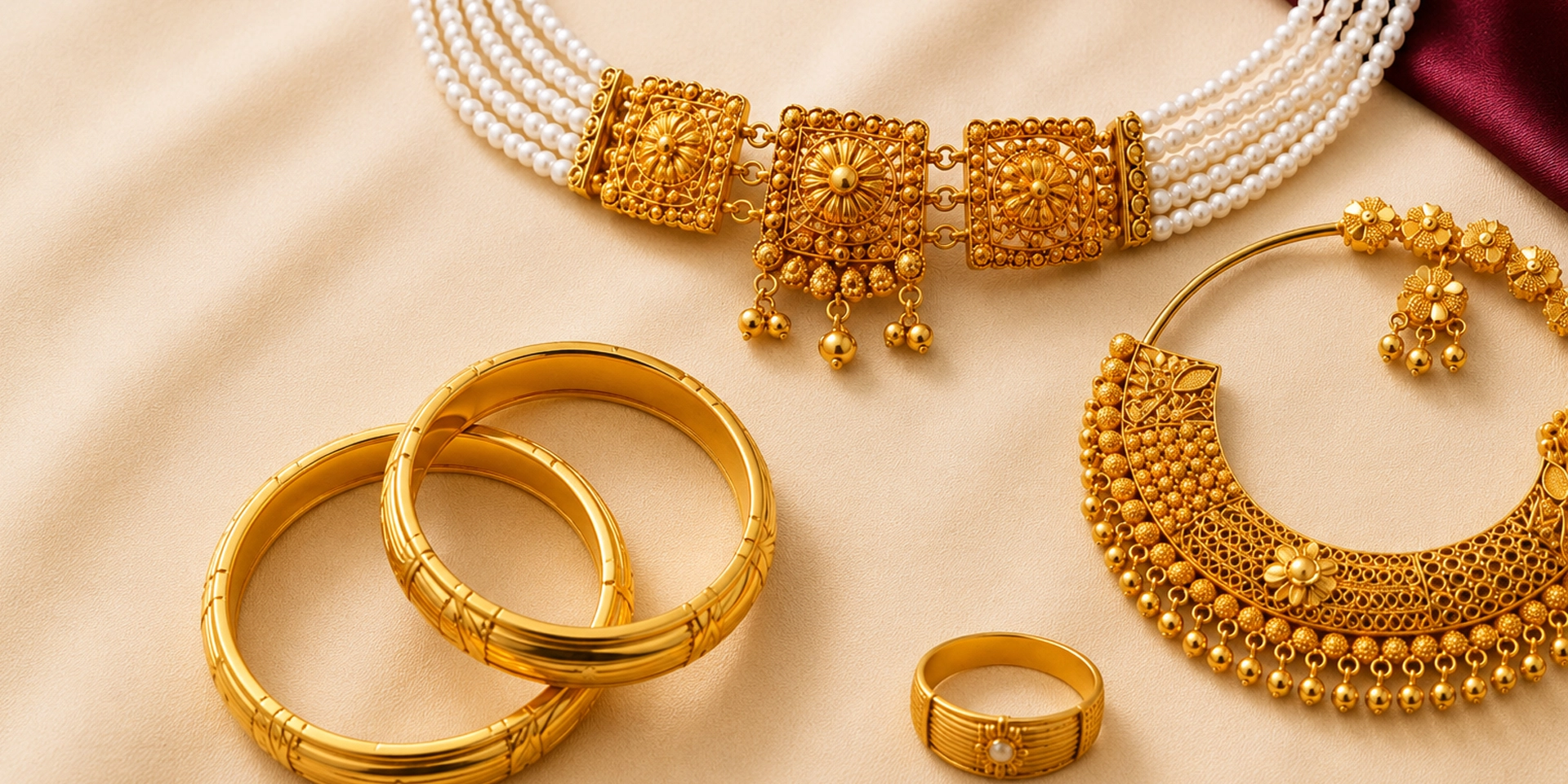
Most guides to Indian wedding jewellery focus on Rajasthani kundan, Bengali gold, or South Indian temple sets. Kumaoni and Garhwali wedding jewellery, however, is rarely discussed despite representing one of Uttarakhand’s richest bridal traditions. Rooted in Kumaoni and Garhwali culture, these customs aren’t just about ornamentation; each piece of gold marks a specific ritual moment, relationship, and blessing.
Why Kumaoni and Garhwali Wedding Jewellery Is More Than Just Gold
In most Indian weddings, gold is bought and worn. In Uttarakhand’s hill communities, gold is given – at precise moments, by precise people, for reasons tied to family status, protection, and lineage. A Kumaoni or Garhwali wedding typically unfolds over several days, and nearly every major ceremony has a corresponding gold ritual attached to it, rather than gold simply being part of the bride’s general trousseau.
The Ring Ceremony: A Gold Ring That’s Never Meant to Come Off
In Kumaoni and Garhwali wedding jewellery traditions, this engagement ring is meant to stay on permanently, serving as a lifelong symbol of marriage rather than a piece replaced by the bridal jewellery worn on the wedding day. The pre-wedding engagement – locally called Sagai or Mangni – includes a ring ceremony where the groom gives the bride a gold ring for her left hand’s ring finger. In Kumaoni tradition, this ring is meant to stay on permanently, treated as a lifelong symbol of the marriage rather than a piece that’s swapped out once wedding jewellery arrives.
Tilak and Shagun: Gold as a Formal Family Gesture
Before the wedding, the groom’s side visits the bride’s home for the Tilak ceremony. A group – traditionally five or seven people – arrives with Shagun trays and applies tilak (vermilion) to the bride, formally marking the alliance between families. Gold items are often part of what’s presented on these trays, functioning less like a gift and more like a documented, witnessed commitment between both sides.
Tehri Nath: The Gold Nose Ring That Signals Marital Status
One of the most visually distinct rituals is the gifting of the Tehri Nath (also called Nathuli) – a large gold nose ring, often inlaid with pearls or enamel work, gifted by the bride’s maternal uncle or the groom’s family. Unlike a decorative nose pin worn elsewhere in India, the nose jewellery in Kumaoni and Garhwali weddings is a recognized marital symbol, comparable in cultural weight to sindoor or a mangalsutra.
The Guluband: A Choker Stitched From Gold, Not Cast
The Guluband (also called Galobandh) is unlike conventional gold jewellery construction. Instead of a cast chain, it’s built from small square or rectangular gold plates – called pattis – hand-stitched onto a red or maroon velvet band using silk thread, not metal links. The red velvet base is tied to fertility and marital well-being in hill culture, and the piece is frequently passed down from mother to daughter, making it as much an heirloom as an ornament. While gold Guluband remains central to bridal and ceremonial wear, silver Guluband designs rooted in the same Kumaoni tradition are more commonly worn day-to-day, offering the same layered, patti-style silhouette in a lighter, everyday-friendly form.
Kangan: Gold Bangles as a Blessing, Not Just an Accessory
Kangans – solid gold bangles, plain or engraved, usually worn in multiples – are gifted to the bride as a symbol of prosperity and the blessings of married life. They’re a near-universal element of both Kumaoni and Garhwali bridal sets, but the emphasis is on the gifting act itself, typically from senior women in the family, rather than the bangles being purchased by the bride’s household alone.
The Bridal Mukut: Gold Worn Once, for One Reason
The Mukut – a ceremonial crown-like headpiece – is worn only for the most sacred part of the ceremony, placed on the couple just before they take their seats for the core wedding rites. In Hindu tradition, the groom is regarded as a representation of Vishnu or Shiva and the bride as Lakshmi or Parvati; the Mukut is treated as validating that status for the duration of the ritual, not as a fashion piece for photographs.
How This Differs From Mainstream Indian Gold-Gifting Customs
In many parts of India, wedding gold is primarily transactional – bought in bulk before the wedding, displayed, then worn on rotation afterward. In Uttarakhand’s hill traditions, the timing and giver of each piece carries meaning: the maternal uncle’s gift is distinct from the mother-in-law’s, the engagement ring is distinct from the wedding-day Nath, and certain pieces (like the Guluband) are expected to be inherited rather than newly purchased at all. For outsiders marrying into a Kumaoni or Garhwali family, or for jewellers designing for this market, that distinction matters – a generic “bridal gold set” doesn’t map cleanly onto what the rituals actually call for.
What This Means If You’re Buying for a Hill Wedding
If you’re sourcing jewellery for a Kumaoni or Garhwali wedding – whether as a family member, a groom’s side gifting the Tilak Shagun, or someone marrying into the community – the pieces to prioritize aren’t generic bridal sets but the ritual-specific ones: a Nath for the nose-ring ceremony, a Guluband or Kangan for the family-gifting moments, and a Mukut if the ceremony calls for one. Local and regional jewellers familiar with hill-region craftsmanship are generally better placed to get the proportions, motifs, and construction (like hand-stitched patti work) authentic to the region, rather than a mass-produced approximation.
Conclusion
For families planning a Kumaoni or Garhwali wedding, or for anyone marrying into one, working with a jeweller who understands these ritual-specific pieces makes a real difference. Jaiguru Jewellers, based in the region, specializes in traditional Kumaoni and Garhwali gold jewellery – from Nath and Guluband to Kangan sets – crafted to match the authenticity these ceremonies call for.
Frequently Asked Questions
Q. What is Kumaoni and Garhwali wedding jewellery?
A. Kumaoni and Garhwali wedding jewellery refers to the traditional gold ornaments worn during weddings in Uttarakhand. Iconic pieces such as the Tehri Nath, Guluband, Kangan, and Mukut hold deep cultural and ceremonial significance and are often passed down through generations.
Q. Which jewellery pieces are essential in Kumaoni and Garhwali wedding jewellery?
A. Traditional Kumaoni and Garhwali wedding jewellery includes the Tehri Nath (large nose ring), Guluband (gold choker), Kangan (gold bangles), engagement ring, and ceremonial Mukut. Each piece is associated with a specific wedding ritual and symbolizes prosperity, blessings, and marital status.
Q. Why is gold important in Kumaoni and Garhwali wedding jewellery?
A. Gold plays a central role in Kumaoni and Garhwali wedding jewellery because it represents prosperity, family heritage, and lifelong blessings. Rather than being purely decorative, each gold ornament is gifted during a specific ceremony and carries cultural and emotional value.
Q. Where can I buy authentic Kumaoni and Garhwali wedding jewellery?
A. Authentic Kumaoni and Garhwali wedding jewellery is best purchased from experienced regional jewellers who specialize in traditional Uttarakhand designs. They can create handcrafted pieces such as the Guluband, Tehri Nath, and Kangan while preserving their original craftsmanship and cultural authenticity.
Q. How is Kumaoni and Garhwali wedding jewellery different from other Indian bridal jewellery?
A. Unlike many Indian bridal jewellery traditions that focus on complete bridal sets, Kumaoni and Garhwali wedding jewellery emphasizes ritual-specific ornaments. Each piece is gifted by particular family members during different ceremonies, making the jewellery an integral part of the wedding customs rather than just bridal adornment.







Leave Your Comment: