

Ethnic fashion trends in India aren’t a passing phase. They reflect how millions of women dress every day, not just during festivals or weddings. From ready-to-wear sarees for daily comfort to kaftans for women who need zero effort, a handful of styles keep coming back season after season. This guide breaks down which ethnic fashion trends have real staying power, why they work, and how to pick pieces that stay relevant well beyond a single wardrobe cycle.
Why Do Some Ethnic Wear Trends Last Longer Than Others?
Ethnic fashion trends and styles that balance comfort, fabric quality, and everyday wearability tend to outlast quick trend cycles. Anything built only for one festive photo rarely survives past a season.
Women’s wear currently accounts for the largest share of India’s ethnic clothing market, and that share continues to grow because demand isn’t limited to weddings anymore. A few patterns explain why:
- Everyday use wins: A dress you can wear five times a month lasts longer in your wardrobe, and in the market, than one you wear once a year.
- Demand is spread wide, not narrow: India’s ethnic wear industry has grown steadily on both metro and non-metro buying, and a style that works in Jaipur, Indore, and Kochi at once tends to stick around.
- Weddings and festivals keep demand predictable: India’s wedding season alone drives a huge share of ethnic wear demand every year, keeping classic silhouettes like kaftans and flared dresses in constant rotation.
Which Ethnic Wear Styles Are Built to Last?
A few silhouettes keep showing up across seasons because they solve real problems: comfort, versatility, and easy styling. Here’s what’s actually holding its ground.
Long Cotton Dresses for Everyday Wear
Long cotton dresses work because they’re built for Indian weather first. Cotton breathes, handles humidity better than synthetic blends, and doesn’t cling in summer heat.
- Breathes better: Handles heat and humidity far better than synthetic blends.
- Transitions easily: A plain or block-printed cotton dress works for a work-from-home day, a quick errand, or a casual evening out with minimal styling.
- Rides a bigger fabric shift: Cotton and handloom textiles have seen renewed demand as shoppers move away from synthetic fast fashion, both online and offline.
Kaftans for Women: Relaxed Yet Elegant
Kaftans for women solve a very specific problem: they fit almost every body type without needing a perfect size match. The loose, flowing cut is comfortable in a way that fitted ethnic wear often isn’t.
- Fits without fuss: One size genuinely works across different body types.
- Multi-occasion: Suits, resort wear, maternity dressing, loungewear, and light festive events when styled with the right fabric and embroidery.
- Has stayed in style for years: That flexibility is exactly why the silhouette hasn’t faded out.
Co-ord Sets for Women: Fusion Made Simple
A co-ord set for women, meaning a matching top and bottom in ethnic prints or fabrics, has become a practical middle ground between traditional wear and western comfort.
- Easy to mix: Two-piece sets can be worn separately, not just as a fixed outfit.
- Dresses up or down fast: That convenience matters more to today’s buyer than a single, occasion-only outfit.
- Tracks the fusion trend: Indo-western fusion wear has grown steadily in India, and co-ord sets are one of the clearest examples, letting women wear ethnic fabric in a format that feels current.
Alia Cut Dresses: A Silhouette That Keeps Coming Back
An alia cut dress is known for its flared, flowy panels that create movement without needing a heavy lehenga underneath. The cut flatters most body shapes because it skims rather than clings.
- Flattering by design: Skims the body instead of clinging, which works across most shapes.
- Festive without the weight: Offers movement and drama without needing a full lehenga underneath.
- Reappears every season: Works for both festive and slightly dressed-down ethnic looks, so it never fully disappears from collections.
Designer Sarees: The Original Wardrobe Staple
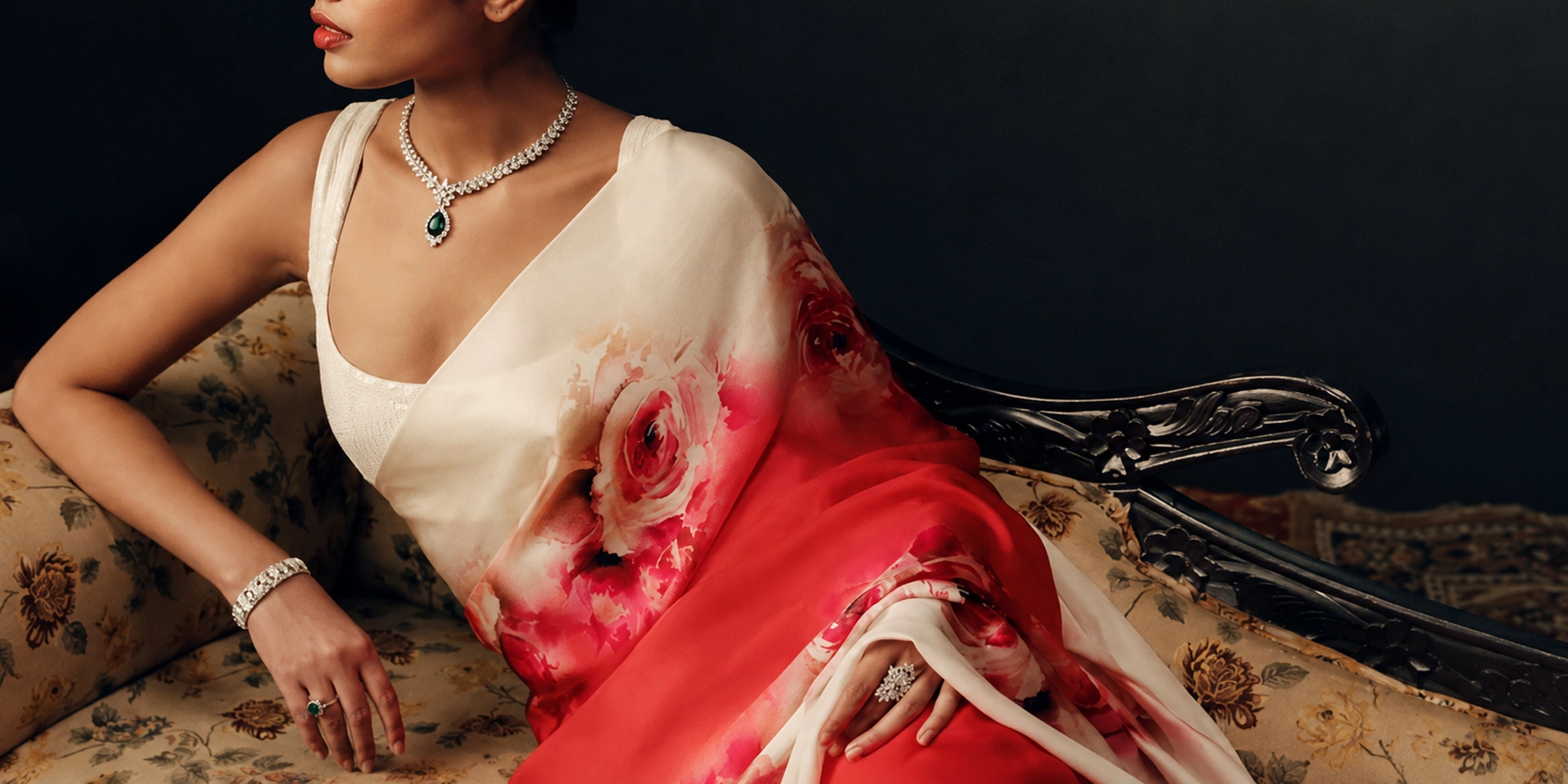
A saree never really left. What’s changed is how designer sarees are being reimagined, with modern drapes, lighter fabrics, and prints that work for both a wedding function and a Sunday brunch.
- Adapts across generations: A well-made saree moves easily from a mother’s wardrobe to a daughter’s, unlike trend-only pieces that date quickly.
- Modern drapes lower the effort: Pre-stitched and easy-drape styles have made sarees far less intimidating for first-time wearers, without losing the traditional silhouette.
- Fabric choice extends its life: Georgette, chiffon, and soft silk sarees hold their shape and drape well after repeated wear, unlike stiffer fabrics that lose form over time.
Designer labels like Studio 113 embrace evolving ethnic fashion trends by working with breathable fabrics and hand-finished detailing on their sarees. This thoughtful approach is part of why the saree keeps finding new relevance instead of being treated as a once-a-year occasion piece, making it a timeless choice for modern women who value both comfort and tradition while staying aligned with today’s ethnic fashion trends.
Craft-Led Fabrics: Chikankari, Block Prints, and Handloom Textiles
Hand embroidery and traditional prints, like chikankari, bagru block prints, and ajrakh, keep their value because they’re rooted in actual craftsmanship, not a passing print trend.
- Buyers want the story: Shoppers increasingly ask who made a fabric, which region it’s from, and how it was produced.
- Backed by policy support: Government initiatives promoting indigenous textiles and handloom production have supported this push toward authentic, handcrafted ethnic wear.
How Should You Style These Pieces for Different Occasions?
The same silhouette can work for a college day and a wedding function, if you style it right.
- Daily wear: A long cotton dress with flat sandals and light jewellery works for errands, office-from-home days, or casual outings without feeling overdressed.
- Festive or semi-formal: Add a dupatta, statement earrings, or a potli bag to a kaftan or alia cut dress, and it moves from daytime to evening without a full outfit change.
- Work or travel: A cotton or linen co-ord set for women pairs well with sneakers or juttis, and it packs flat, which makes it practical for short trips.
What’s Fueling This Long-Term Shift?
A few real, ongoing factors are keeping these ethnic wear trends relevant instead of letting them fade into a single season.
- Online access has changed buying habits: E-commerce now accounts for a meaningful share of ethnic wear sales in India, so shoppers outside metro cities can access the same cotton dresses, kaftans, and co-ord sets as buyers in Delhi or Mumbai.
- Comfort-first dressing isn’t going away: Since the pandemic, comfortable fabrics and relaxed silhouettes have stayed popular even as festive shopping picked back up.
- Younger buyers want fusion, not just tradition: Gen Z and millennial shoppers are driving demand for ethnic-western fusion pieces they can wear to work, college, or casual outings, not only weddings.
- Sustainability awareness is growing: More buyers are asking about fabric sourcing and production methods, favouring natural fibres like cotton and handloom over synthetic, trend-only pieces.
Suggested To Read: Punjabi Suit Design Styles
How Do You Choose Ethnic Wear That Stays Relevant for Years?
Pick pieces that solve a real styling problem, not ones built around a single trending print. Here’s a simple checklist:
- Prioritise breathable fabric: Cotton, linen, and handloom blends hold up better over time and multiple washes than synthetic mixes.
- Choose silhouettes over prints: A well-cut salwar kameez or co-ord set stays wearable long after a specific print goes out of season.
- Check the stitching and finish: Even a simple long cotton dress should have clean seams and even hemlines; that’s what makes it last beyond a few wears.
- Go for versatile colour palettes: Neutrals, earthy tones, and classic pastels mix easily with other pieces already in your wardrobe.
- Look for craftsmanship, not just decoration: Hand block prints and chikankari hold value differently than machine-printed patterns.
Several Jaipur-based labels, including The Jaipur Studio, reflect evolving ethnic wear trends by working with breathable cotton and hand block prints. This craft-led approach is a big part of why traditional ethnic wear continues to find its way back into everyday wardrobes, offering the perfect balance of comfort, heritage, and contemporary style.
Frequently Asked Questions
Q. Are long cotton dresses good for daily wear in India?
A. Yes. Cotton is breathable and handles India’s heat and humidity better than most synthetic fabrics, making it a practical daily-wear choice.
Q. Can kaftans be worn for festive occasions, not just casual days?
A. Yes. A kaftan in silk, chikankari, or embroidered fabric can work well for lighter festive events, while cotton kaftans suit daily or resort wear.
Q. What makes a co-ord set different from a regular ethnic suit?
A. A co-ord set uses a matching top and bottom that can also be worn separately, offering more styling flexibility than a fixed suit set.
Q. Why is the alia cut dress so popular right now?
A. Its flared, flowy silhouette flatters most body types and offers movement without the weight of a full lehenga, making it easy to wear for both festive and semi-formal occasions.
Q. How do I know if an ethnic outfit will stay in style?
A. Focus on the fabric quality, silhouette, and craftsmanship rather than a single trending print. Classic cuts and natural fabrics age better than trend-only pieces.



Leave Your Comment: