

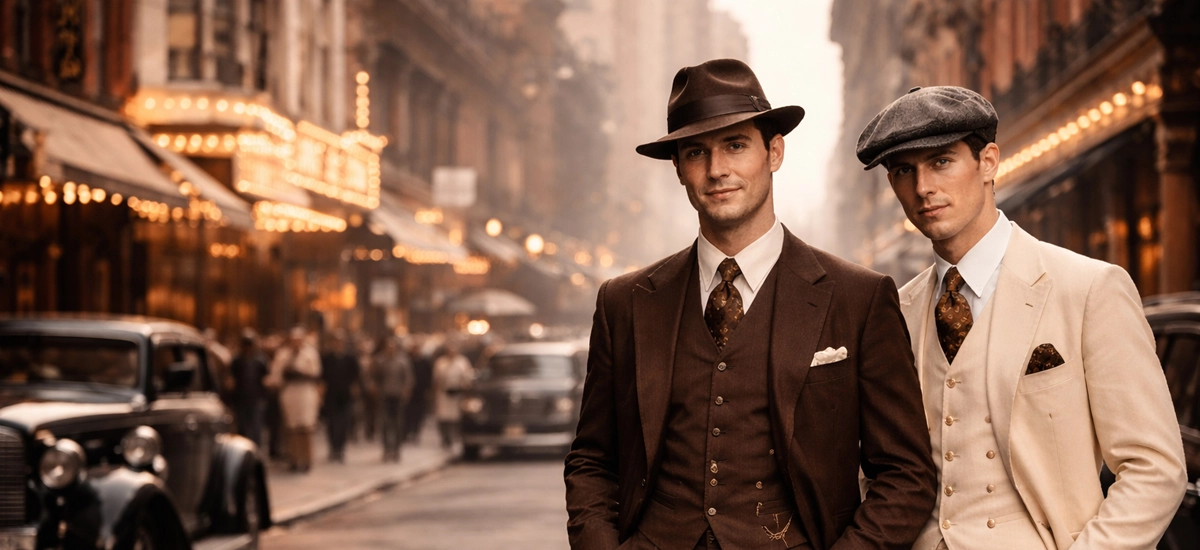
The 1920s were considered a dramatic shift in mens fashion history. It’s an era where fashion became a symbol of personal identity, cultural change, & modern lifestyle. 1920s mens fashion was not only just about what men wore, but it also reflected society. Emerging from the shadows of World War-I, adopting economic prosperity, jazz culture, and new confidence toward self-expression. This exclusive guide helps you explore 1920’s men’s fashion from suits to accessories and from daily wear to social symbols and provides a complete understanding of one of the most influential centuries in the history of style.
The Cultural Background of 1920s Mens Fashion
The Century that followed World War-I was identified by innovation and rebellion against old norms. That time Economies boomed, cities developed, and nightlif,e jazz music transformed. In this environment, 1920s mens fashion fashion became a language of freedom and identity and men’s outfits evolved from rigid, military-inspired textiles to more relaxed, expressive styles.
During the Twenties, societal shifts influenced 1920’s men’s fashion profoundly. The war had democratized style, soldiers returned to home with practical dresses that inspired simpler cutouts, while normal people wanted clothes to match their new zest for life. Men began dressing for work, etiquette and for pleasure, leisure, and personal branding to make menswear progress. This changing topic is crucial to understanding how mens fashion 1920s has developed and why it remains a timeless reference for modern fashion style.
From Formality to Modernity – The Evolution of 1920s Mens Fashion Suits
The Classic 1920s Suit Structure
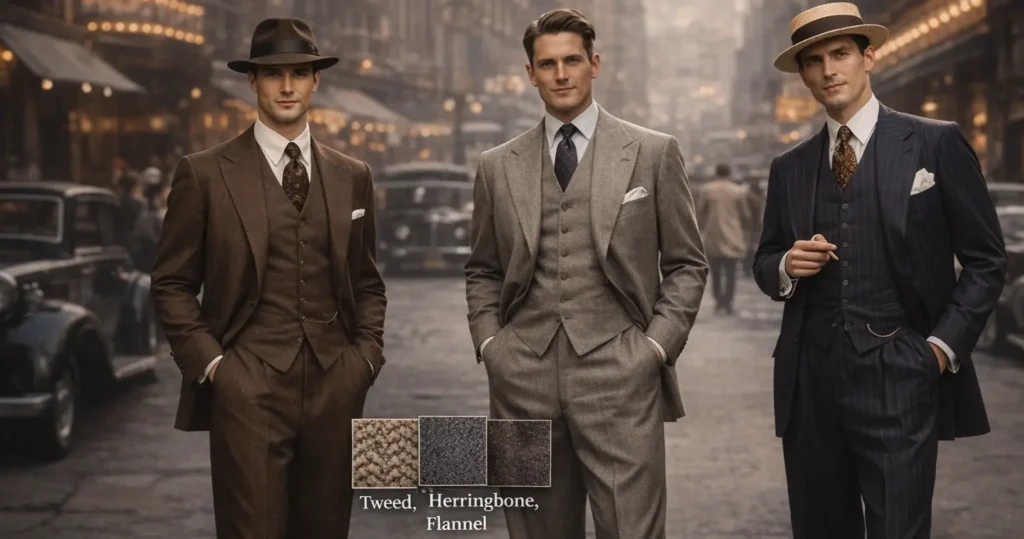
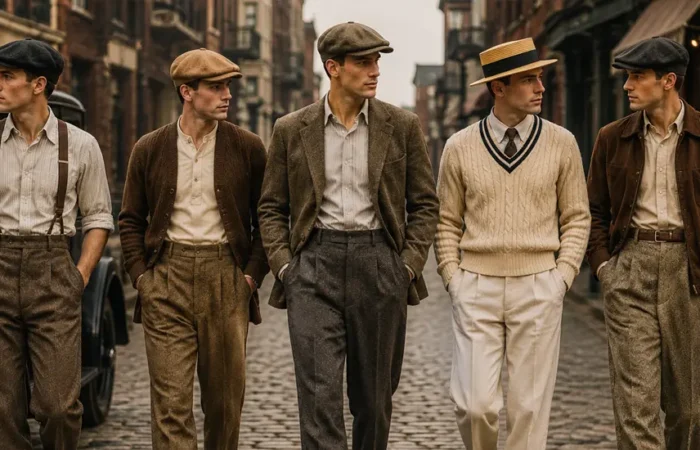
An ideal element of men’s 1920s fashion was the suit. These are not only used to wear for business but also adorned during public outings. In the early century, suits featured slim, straight cuts with high waists and normally fitted jackets. This represented a shift away from the boxy, heavy tailoring of previous centuries as men accepted lighter forms that allowed easy movements.
These early suits are influenced by military style. They had strong, structured shoulders and slim, straight trousers that were worn slightly above the ankle. The jackets usually had narrow lapels and were often buttoned high on the chest. As the decade progressed, that fashion style shifted notably.
Key Suit Features of the 1920’s Men’s Fashion Era
- Jackets: Generally, jackets feature shorter lengths than those of earlier decades, with two or three buttons. Lapels similarly narrowed early on, widening toward the mid-1920s.
- Trousers: These high-waisted and straight, often cuffed with a sharp crease that showcased an elegant line down the leg.
- Fabrics: textiles/garments remained predominant, with men favoring textures like tweed, herringbone, and flannel for both warmth and fashion depth.
From 1920s Fashion Men Jazz Suits to Wider Silhouettes
By the mid-1920s, men’s suit fashion styles began to accept a slightly broader cut, like the Jazz suit. The flamboyant jazz suit is known for its snug fit, and more relaxed fits took hold, mirroring broader societal tastes for comfort and leisure clothing. After that, trousers widened, jacket shoulders softened, and everyday tailoring became less flexible. These changes helped define mens fashion in the 1920s as dynamic and stunning.
In Britain, the Prince of Wales introduced refined yet relaxed lounge suits, with softened shoulders and broader lapels that contrasted with the earlier amazing cut.
A Subtle Details of Style: Shirts, Collars & Neckties
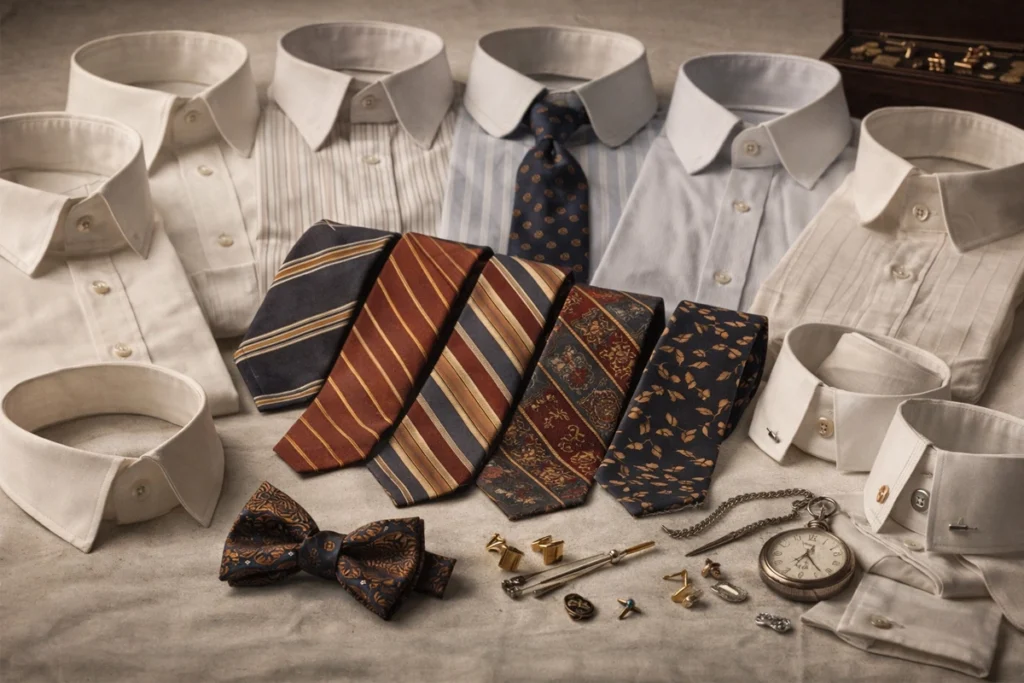
Beyond suits, men’s 1920s fashion was refined by how shirts and neckwear helped elevate an attire. In 1920s mens fashion time shirts usually featured detachable collars, which was a practical innovation and wearers were allowed to swap collars without laundering the entire shirt. That was a useful feature in the 1920s era before modern laundry convenience. These shirt collars initially remained stiff, offering a formal look, but ultimately softened for comfort later in the decade.
Especially for formal wearers, where Shirt fabrics were typically cotton or linen and came in white or light hues, Stripes and subtle designs appeared in casual and business contexts, adding personality without overdoing the refined aesthetic typical of 1920s mens fashion.
Necktie Trends
- Silk Neckties: Usually adorned with bold stripe patterns or Art Deco motifs.
- Tie Knots: The Windsor knot got popularity, adding weight and symmetry to the tie’s drapes.
- Bow Ties: chosen for evening events and formal attire for elegant appeal..
Accessories like collar pins, cufflinks, and detachable cuffs added detail and refinement, signaling a man’s attention to sartorial finesse.
1920s Mens Fashion Casual & Sportwear: Weekends and Leisurewear
Although suits dominated dailywear dress, 1920s fashion for men also included unique casual and sportswear components, especially for weekends and spare time activities. Golfing, tennis, and social club outings are inspired by stylish yet comfortable looks.
Popular Casual Pieces
- Knickers: Loose-fitting breeches that buttoned just below the knee, a common choice for sporty occasions and playtimes.
- Sweaters & Cardigans: These were used to wear over shirts for weekend wear, normally paired with high-waisted trousers or knickers.
- Sport Jackets: 1920s mens fashion tweed or soft-wooled sport coats provided a relaxed alternative to formal Indian dresses.
This casual dimension of 1920s fashion men contributed to the larger trend of men dressing not just for requirement, but for lifestyle and comfort, a principle that still influences modern menswear.
Hats: A Defining Signature of the Decade
No discussion of mens fashion 1920s is complete without hats. In that era, a man never used to leave the house without headwear. That was a symbol of status, class, and style.
Essential Hat Styles
- Fedora: An amazing staple with a creased crown and medium brim, perfect for city wear and everyday styling.
- Homburg: Used to be worn by gentlemen for a more masculine appearance.
- Boater & Panama Hats: Straw constructions ideal for spring and summer events.
- Flat Caps / Newsboy Caps: Favored among working-class men and for casual weekend looks.
Hats not only protected men from the elements but also served as a central visual anchor to an outfit, a practice that modern men still emulate in vintage-inspired 1920s mens fashion circles.
Footwear for Every Occasion
Complementing refined outfits, men’s 1920s fashion placed focus on footwear that matched the decade’s polished silhouette.
Key Shoe Styles
- Oxford Shoes: Suited for both business and evening wear, which are Lace-up and elegant.
- Two-Tone Spectators: Leather shoes combining contrasting colors for more casual or social occasions – for example, black and white.
- Wingtips & Brogues: Featuring decorative cut work that are popular among younger, fashion-forward men.
Matching the correct shoes with men’s suits or casual wear completed outfits and reinforced 1920s mens fashion as rooted in perfection and balance with flair.
Depth in Detailed Fabrics & Textures
The materials of 1920s mens fashion were as important as the silhouette itself. Natural fibers dominated the synthetic textiles that had yet to attain widespread adoption.
- Wool: Was available in different weights and densities and was the backbone of 1920s mens fashion suits.
- Tweed: Especially popular in sport jackets and overcoats that offer warmth and texture. This fabric remains popular in 20s mens fashion.
- Herringbone & Flannel: Added visual interest and comfort in both formal and casual pieces. This fabric combines the soft characteristic soft, napped texture and warmth of flannel.
- Linen: Used for lightweight summer suits and this fabric is breathable, durable and highly absorbent. Made from the fibres of the flax plants and, this linen is still popular.
Colors tended toward earth tones such as navy, gray, brown, and muted greens, but younger men increasingly experimented with patterns, lighter shades, and contrasts for evolving social norms.
Accessories: Small Details With Big Statements
Accessories in 1920s mens fashion were not effortless; they were essential components of a complete look.
- Pocket Watches – The pocket watch can be classified in large part by the case type, which has both an aesthetic and protective function. With its many different styles, movements, and case types, pocket watches are as much an accessory and fashion statement as they are a timepiece.
- Suspenders or Belts: Suspenders (braces in the UK) vs. belts are acceptably optional according to function and style preference. One of the basic principles of classic menswear is not to combine them. Suspenders are indispensable on trousers with a high waist as well; they give enhanced support and keep the simple, unbroken line of the outfit.
- Cufflinks & Collar Pins: Cufflinks and collar pins (such as tie pins or tie bars) are a fancy emblem of a well-dressed man on formal and semi-formal occasions. The details are small but communicate a quiet sense of refinement, care, and respect for sartorial etiquette.
- Scarves: In the 1920s, they wore scarves for a functional and fashionable reason. Whichever way — cashmere or silk — they impart a bit of warmth during colder months, and texture, color and flair to an outfit, so that they become a versatile accessory for both more casual and tailored looks.
- Gloves & Canes: Gloves and canes are functional marching attachments to express personal style. Gloves, as a rule, are made of soft leather, which grants comfort and agility to your hand as you move, especially when you are driving.
Each accessory worked with garments to create a polished, intentional aesthetic, one where every visual element had purpose.
Class & Identity in 1920s Men’s Fashion
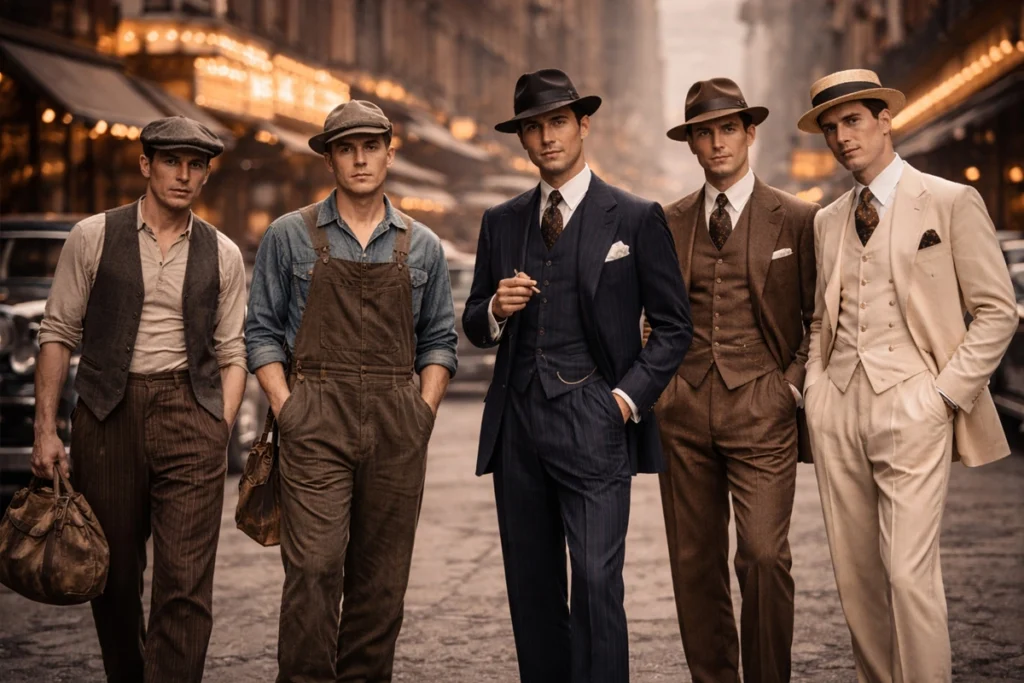
Clothing and Class One of the defining aspects of twentiesmen’s fashion was how clothes reflected class. The gentlemen of the upper classusually wore tailored suits, nice hats, and polished shoes, while their working-class counterparts put on sturdy fabric work clothes.
Gangster iconography, pinstripe suits and fedoras that were spread by the media of the time and urban legend weren’t just for criminals however, businessmen all across America wore similar-looking suits, which made it a very iconic visual in both men’s fashion during the 1920s.
There were also regional distinctions: European tailoring emphasized slim silhouettes and restraineddetail, whereas American style was practical with more free spirit.
Hairstyles & Grooming: The Modern Look Takes Shape
Grooming in the 1920s changed to groom’s hair, face and shoulders. The groom in the twenties- hairstyle like pretty much everything else that walked out of doorsteps in the 1920’s, grooming went through significant changes. Shaving came to be expected — a response to military need during World War i that stuck for civilian purposes, offering a look of time-polished respectability.
A short, neat hairstyle was usually parted to suit the hat and collar shapes. Clean lines and trim looks were increasingly becoming associated with modern masculinity — a trend befitting the simpler, more orderly decade.
Iconic Influencers & Media Representations
1920s mens fashion had a complete transformation of all the traditional clothes. History has it that every social group in their twenties had its craze for a particular type of dressing up and their respective obsession wouldn’t be influenced by any other mode of style or vogue fashion. Even if more contemporary movies sometimes caricature dress, TV series such as Boardwalk Empire and the repeated new leads to The Great Gatsby have maintained interest in vintage clothing and prompted how we think of 1920s mens fashion.
Character archetypes like the dapper gentleman, Ivy League upper class kid, and slick entertainer served to diversify the fashion narrative of the era and give it depth, meaning it would continue to resonate for decades.
Bringing 1920s Style Into the Modern Wardrobe
Today’s vintage revival movements draw heavily from 1920s mens fashion. Whether through tailored suits with period-inspired details, classic accessories like pocket watches, or curated casual pieces, contemporary fashion often pays homage to this transformative decade.
Tips to Modernize 1920s Mens Fashion Style
- Choose classic three-piece suits with modern tailoring but traditional elements like high waists and natural shoulders.
- Incorporate hats — fedoras or flat caps — for a subtle vintage flavor.
- Accessorize purposefully with refined neckties, polished shoes, and classic pocket squares.
- Balance proportions to avoid costume-like looks and instead emphasize timeless elegance.
Conclusion: Why 1920s Mens Fashion Still Matters
1920s mens fashion wasn’t simply a set of clothes; it was a cultural shift. From the evolution of the suit to the emergence of casual leisurewear, the roaring twenties laid the foundations for modern menswear as we know it today. Its influence persists in tailored cuts, accessory sensibilities, and the foundational belief that fashion reflects identity, lifestyle, and societal change.
For anyone passionate about style history, 1920s mens fashion remains a rich, dynamic era worth studying and appreciating — not just for its iconic looks, but for the story it tells about a world in transformation.
FAQs: Common Questions About 1920s Men’s Fashion
Q. What did most men wear daily in the 1920s?
A. Men usually wore tailored suits with shirts and neckties, even for daily errands, as dressing formally was a social norm of the era.
Q. Did all men wear suits in the 1920s?
A. While suits were common, men also wore casual attire — including sweaters, knickers, and sport jackets — on weekends and for leisure activities.
Q. What were typical accessories for men in the 1920s?
A. Pocket watches, collared shirts with cufflinks, suspenders or belts, scarves, hats (especially fedoras), and polished shoes completed outfits.
Q. Why is 1920s style still influential today?
A. Its blend of tailored precision with newfound casual comfort laid the foundation for modern menswear aesthetics, making it a perennial source of inspiration.




Leave Your Comment: